English
 Arabic
 French
 Spanish
 Portuguese
 Deutsch
 Turkish
 Dutch
Dutch
 Italiano
 Russian
 Romaian
 Portuguese (Brazil)
 Greek
Greek
Why Do Manufacturers Choose Flyloong Candy Machinery Manufacturer For Consistent Output
Shopping |
2026-01-08 03:49:55
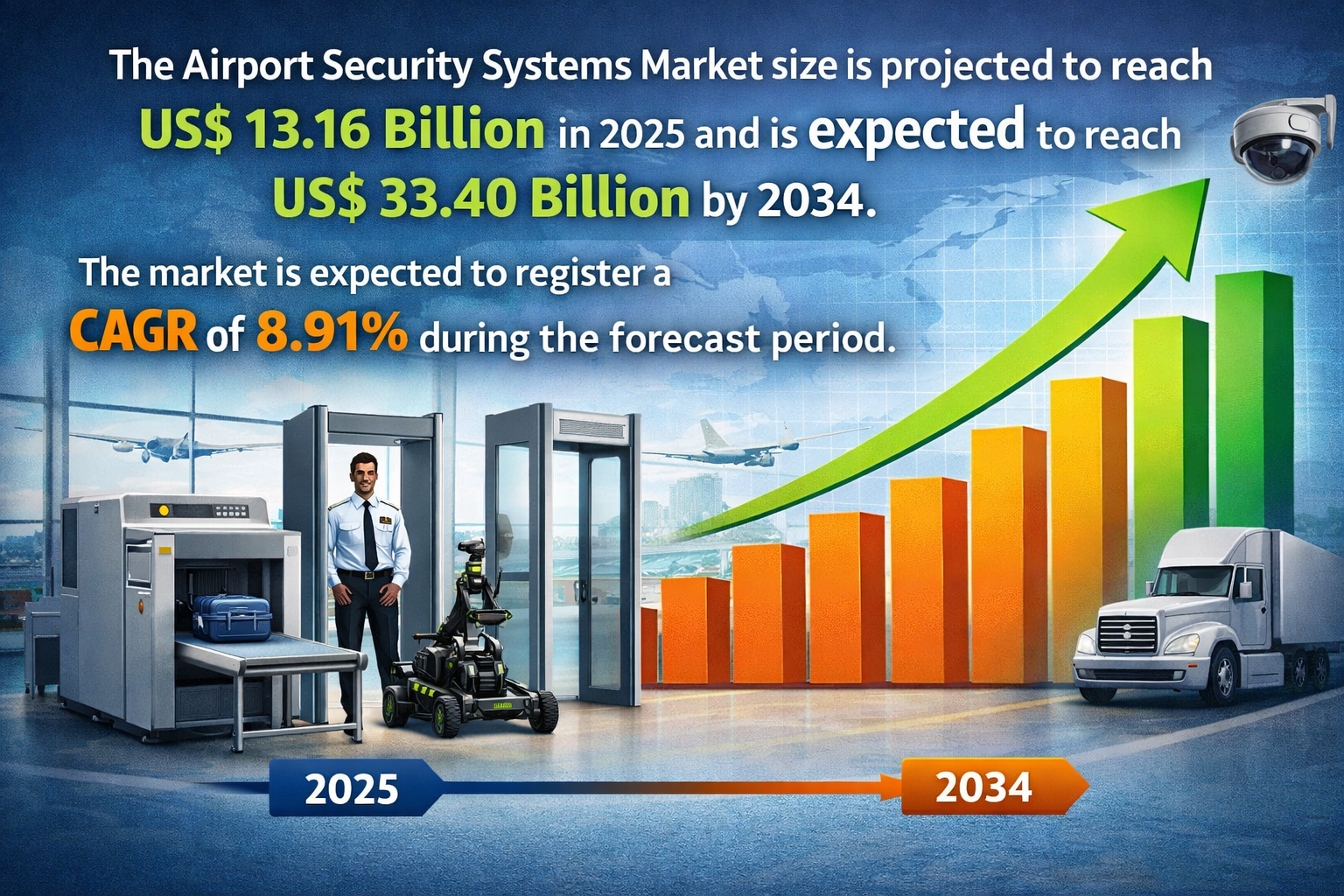
The global aviation industry is witnessing a transformative era where safety and efficiency are the primary pillars of operational success. As air travel returns to and exceeds pre-pandemic levels, the infrastructure supporting this growth must evolve to meet sophisticated challenges. The Airport Security Systems Market size is projected to reach US$ 13.16 Billion in 2025 and is expected to reach US$ 33.40 Billion by 2034. The market is expected to register a CAGR of 8.91% during the forecast period. This significant growth is driven by the integration of advanced technologies, increasing threats of terrorism, and the urgent need for streamlined passenger processing.
Understanding the Market Dynamics
The expansion of the airport security sector is not merely a response to increasing passenger volumes but also a result of the rising complexity of modern security threats. Traditional security measures are being replaced or augmented by digitized solutions that offer higher precision and lower error rates. Governments across the globe are mandating stricter security protocols, forcing airport authorities to invest heavily in state of the art screening and surveillance technologies. Infrastructure development, particularly in emerging economies across the Asia Pacific and Middle East regions, is a major contributor to market demand. New airport projects and the modernization of existing terminals require comprehensive security frameworks that include everything from perimeter fencing to biometric access control.
Download Sample PDF:https://www.theinsightpartners.com/sample/TIPAD100001370
Technological Advancements in Screening
One of the most significant shifts in the market is the transition toward CT (Computed Tomography) scanners for cabin baggage. Unlike traditional X-ray machines, CT scanners provide a 3D view of the contents of a bag, allowing security personnel to identify explosives and prohibited items with much higher accuracy. This technology often allows passengers to keep liquids and laptops inside their bags, significantly improving the traveler experience and reducing queue times. Furthermore, the implementation of AI (Artificial Intelligence) and Machine Learning (ML) in screening processes is revolutionary. These algorithms can analyze images in real time to detect anomalies that might be missed by the human eye. By automating the identification of potential threats, airports can allocate their human resources to more complex security tasks, enhancing overall operational efficiency.
Surveillance and Perimeter Security
Beyond the checkpoint, airports are focusing on securing their vast perimeters and internal public spaces. High definition CCTV cameras equipped with facial recognition technology are becoming standard. These systems allow for the tracking of individuals of interest across the terminal and can trigger alerts if unauthorized personnel enter restricted zones. Ground surveillance radar and thermal imaging are also being deployed to monitor airport boundaries, especially in low visibility conditions. These systems provide a multi layered defense strategy that protects against both external intrusions and internal security breaches.
Industry Updates and Strategic Alliances
Recent headlines and industry updates regarding Airport Security Systems Market News indicate a surge in public private partnerships aimed at deploying contactless technology. The competitive landscape features a mix of established aerospace giants and specialized technology firms. These entities focus on continuous R&D to maintain a competitive edge. Key players include:
Smiths Detection Group Ltd.
L3Harris Technologies, Inc.
Leidos Holdings, Inc.
Raytheon Technologies Corporation
Honeywell International Inc.
Analogic Corporation
Nuctech Company Limited
OSI Systems, Inc. (Rapiscan Systems)
Thales Group
IDEMIA
These organizations are increasingly forming strategic partnerships with airport operators to develop customized security solutions that address specific regional challenges and regulatory requirements.
Integration of Biometrics and Digital Identity
The concept of a "seamless journey" is a major trend influencing the market. Biometric technology, including iris scans and facial recognition, is being integrated into various touchpoints such as check-in, baggage drop, and boarding gates. By linking a passenger's biometric data to their digital identity, airports can eliminate the need for physical documents at every stage. This not only enhances security by ensuring that the person traveling is indeed the person authorized to do so but also speeds up the movement of people through the terminal. As airport systems become more interconnected through the Internet of Things (IoT), the risk of cyber attacks grows. Protecting the digital infrastructure of an airport is now just as critical as protecting its physical perimeter. Market participants are investing in robust cybersecurity frameworks to prevent data breaches and the hijacking of critical flight information systems.
Sustainability and Operational Efficiency
Sustainability is also becoming a key consideration in the development of security hardware. Manufacturers are looking for ways to reduce the energy consumption of large scale scanners and improve the lifecycle of security components. This shift aligns with the broader aviation industry's goal of reaching net zero emissions. Furthermore, the integration of big data analytics allows airport managers to predict peak traffic times and adjust security staffing accordingly, reducing bottlenecks and enhancing the overall passenger experience without compromising on safety protocols.
Future Outlook
The future of the airport security systems market will be defined by the "Smart Airport" concept, where every component of the security apparatus is interconnected and data driven. We can expect a greater reliance on autonomous security robots for patrolling and the use of blockchain for secure identity management. As passenger volumes continue to rise, the focus will shift toward non intrusive screening methods that detect threats from a distance, allowing travelers to walk through security zones without stopping. The continuous evolution of artificial intelligence will likely lead to predictive security modeling, where potential risks are identified and mitigated before they even reach the airport terminal. Despite the challenges of high initial investment costs, the long term benefits of enhanced safety and operational fluidity will ensure steady market expansion through 2034.
Related Reports:
Aircraft Vertical Stabilizer Market
About Us
The Insight Partners is a leading global market research and consulting firm specializing in delivering actionable insights across various industries. Our research reports combine extensive primary and secondary research to provide accurate market intelligence, helping businesses make informed strategic decisions. The company provides detailed analysis on emerging technologies, market trends, competitive landscapes, and growth opportunities across sectors including technology, healthcare, manufacturing, and energy.
Contact Us
The Insight Partners
Phone: +1-646-491-9876
Email: sales@theinsightpartners.com
Website: https://www.theinsightpartners.com