English
 Arabic
 French
 Spanish
 Portuguese
 Deutsch
 Turkish
 Dutch
Dutch
 Italiano
 Russian
 Romaian
 Portuguese (Brazil)
 Greek
Greek
Germany Diabetes Devices Market to Reach $3 Billion by 2034
Fitness |
2026-04-02 08:38:05
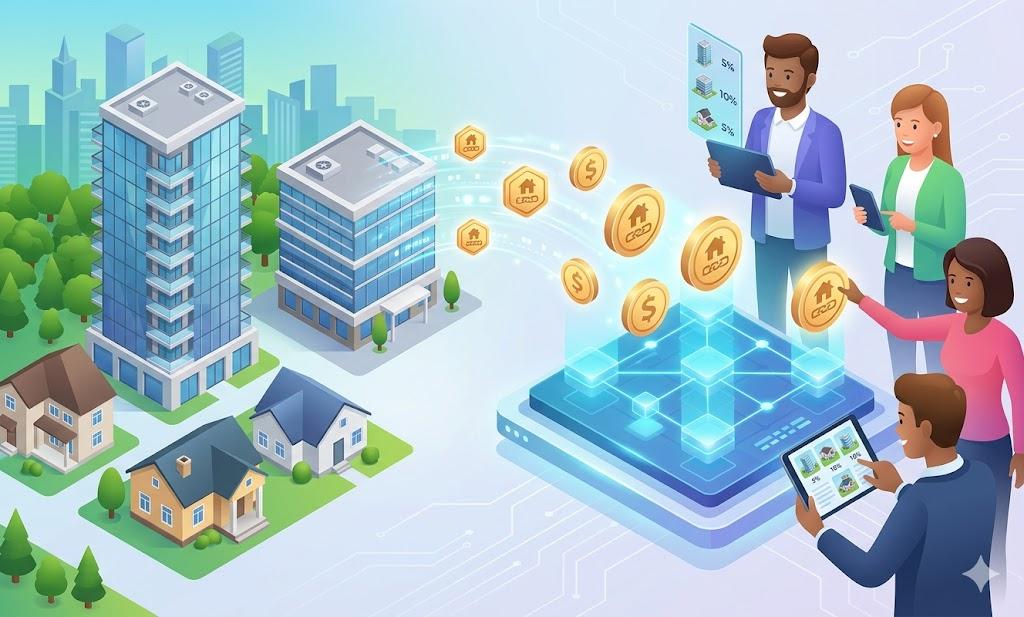
The concept of owning real estate has long been associated with high capital requirements, lengthy legal procedures, and limited access for average investors. Over the past few years, digital innovation has introduced a new model that is gradually changing how people think about property ownership and investment. Real estate asset tokenization is gaining attention as a method that connects traditional property markets with blockchain-based systems, allowing investors to participate in real estate opportunities in a more flexible and accessible manner.
At its core, this approach involves converting ownership rights of a physical property into digital tokens that can be bought, sold, or traded. These tokens represent fractional ownership, making it possible for individuals to invest in properties without purchasing them outright. As this model continues to gain traction, it is influencing how wealth is created, managed, and distributed in the digital era.
Real estate tokenization refers to the process of representing ownership of a property through digital tokens stored on a blockchain. Each token corresponds to a share of the asset, allowing multiple investors to hold ownership stakes in a single property.
Unlike traditional real estate transactions, which involve intermediaries such as brokers, banks, and legal institutions, tokenization introduces a digital structure where ownership records are maintained on a decentralized ledger. This reduces dependency on manual documentation and simplifies the transfer of ownership.
A Real Estate Tokenization company typically provides the infrastructure and technical expertise required to digitize property assets. These companies design platforms where investors can purchase tokens, track their investments, and participate in property-related earnings such as rental income.
Traditional real estate investment often requires significant capital, making it inaccessible to many individuals. Additionally, liquidity remains a major challenge, as selling property can take weeks or even months. Real estate asset tokenization addresses these limitations by allowing fractional ownership and quicker transactions.
With fractional ownership, investors can buy small portions of a property rather than committing to full ownership. This lowers the entry barrier and allows a broader range of participants to enter the market. At the same time, tokenized assets can be traded on digital platforms, improving liquidity compared to conventional real estate investments.
Real Estate Tokenization Services play a vital role in facilitating this transition. These services cover asset digitization, legal structuring, compliance, and platform integration, ensuring that tokenized properties adhere to regulatory standards.
The impact of real estate asset tokenization on wealth creation is becoming more evident as adoption grows. By opening access to property investments, it allows individuals to diversify their portfolios without requiring large capital reserves.
One of the primary advantages lies in the ability to invest in high-value properties that were previously limited to institutional investors. Commercial buildings, luxury apartments, and large-scale developments can now be divided into smaller units, enabling participation from retail investors.
Moreover, rental income generated from these properties can be distributed proportionally among token holders. This creates a consistent income stream, contributing to long-term wealth accumulation.
Another important factor is market accessibility. Investors from different regions can participate in property markets across the globe without being physically present. This expands investment opportunities and allows individuals to tap into markets with higher growth potential.
Blockchain technology serves as the foundation for real estate asset tokenization. It maintains a secure and immutable record of ownership, ensuring that all transactions are verifiable and tamper-resistant.
Each transaction involving tokenized assets is recorded on the blockchain, providing a clear audit trail. This reduces the risk of fraud and eliminates the need for extensive manual verification processes.
Smart contracts are another critical component. These are self-executing agreements that automatically enforce the terms of a transaction. For example, rental income distribution can be programmed into a smart contract, ensuring that token holders receive their share without delays or manual intervention.
Real estate tokenization development relies heavily on blockchain frameworks to create systems that manage token issuance, trading, and ownership tracking.
A well-structured platform is essential for the successful implementation of tokenized real estate investments. Real Estate Tokenization Platform Development focuses on creating digital environments where investors can interact with tokenized assets efficiently.
These platforms typically include features such as:
A Real Estate Tokenization Development company is responsible for designing and deploying these platforms while ensuring compliance with local and international regulations. Their expertise extends to integrating blockchain protocols, creating smart contracts, and maintaining system security.
Real estate asset tokenization can be implemented through several methods, each catering to different investment structures and regulatory requirements.
In this method, tokens represent ownership shares in a property. Investors receive dividends based on the income generated by the asset, such as rental revenue or profits from property appreciation.
Here, tokens represent a loan provided to a property owner or developer. Investors earn returns in the form of interest payments, similar to traditional debt instruments.
Hybrid tokenization combines elements of both equity and debt. Investors may receive a mix of fixed returns and profit-based earnings, depending on the structure of the investment.
This method links tokens directly to a physical property, ensuring that each token is backed by a tangible asset. It provides a sense of security for investors, as their investment is tied to a real-world property.
When executing real estate tokenization, several important methods are followed to ensure efficiency and compliance:
These methods form the foundation of Real Estate Tokenization Development Services, ensuring that tokenized assets are structured in a way that aligns with both technological and legal standards.
Real estate asset tokenization offers advantages for both investors and property owners. For investors, it provides an opportunity to participate in real estate markets with smaller investments. It also allows for portfolio diversification, as individuals can invest in multiple properties across different locations.
For property owners, tokenization opens up new avenues for raising capital. Instead of relying solely on traditional financing methods, they can attract a broader pool of investors through token sales. This can lead to faster funding and reduced dependency on banks or financial institutions.
Liquidity is another notable benefit. Tokenized assets can be traded on secondary markets, allowing investors to exit their positions more easily compared to traditional property investments.
Despite its potential, real estate asset tokenization must operate within a defined legal framework. Regulations vary across countries, and compliance is crucial for ensuring the legitimacy of tokenized assets.
A Real Estate Tokenization Development company typically works closely with legal experts to structure token offerings in accordance with securities laws. This includes conducting due diligence, defining investor rights, and ensuring proper documentation.
Regulatory clarity is gradually improving as governments and financial authorities recognize the growing interest in digital assets. However, ongoing compliance remains a critical aspect of tokenization projects.
While real estate asset tokenization presents numerous opportunities, it also comes with challenges that need to be addressed.
One of the primary concerns is regulatory uncertainty. In some regions, the lack of clear guidelines can create obstacles for companies looking to implement tokenization solutions.
Technology adoption is another factor. Not all investors are familiar with blockchain systems, which may limit participation. Educating users and providing intuitive platforms can help bridge this gap.
Market acceptance also plays a role. Traditional real estate investors may be hesitant to adopt digital models, especially when it involves new technologies and unfamiliar processes.
Real Estate Tokenization Services often include consulting and educational support to help stakeholders understand the benefits and operational aspects of tokenized investments.
As demand for tokenized assets increases, Real Estate Tokenization companies are expanding their offerings to cater to different segments of the market. These companies provide end-to-end solutions, covering everything from asset evaluation to platform deployment.
Their role extends beyond technology development. They also assist in structuring investment models, managing compliance, and creating user-friendly interfaces for investors.
By combining technical expertise with industry knowledge, these companies are helping bridge the gap between traditional real estate and digital investment ecosystems.
The future of real estate asset tokenization appears promising as more investors and property owners recognize its potential. The integration of digital technologies with real estate markets is expected to continue evolving, creating new opportunities for wealth creation.
As platforms become more refined and regulations become clearer, adoption is likely to increase. Institutional investors may also begin to participate more actively, further expanding the market.
In addition, advancements in blockchain technology and digital finance are expected to enhance the efficiency and security of tokenized systems. This could lead to broader acceptance and increased participation from global investors.
Real estate tokenization development is likely to focus on improving user experience, strengthening security measures, and expanding interoperability between different platforms.
Real estate asset tokenization represents a significant shift in how property investments are structured and accessed. By introducing fractional ownership and digital trading mechanisms, it offers a new pathway for wealth creation that is more inclusive and flexible than traditional models.
With the support of Real Estate Tokenization Development Services and the growing expertise of Real Estate Tokenization Development companies, this approach is gradually gaining acceptance across global markets. While challenges remain, ongoing advancements in technology and regulatory frameworks are expected to support its growth.
As the digital era continues to influence financial systems, real estate asset tokenization stands as an example of how innovation can reshape long-standing industries. It provides individuals with new ways to participate in property investments, contributing to a more diversified and accessible wealth creation landscape.