English
 Arabic
 French
 Spanish
 Portuguese
 Deutsch
 Turkish
 Dutch
Dutch
 Italiano
 Russian
 Romaian
 Portuguese (Brazil)
 Greek
Greek
Cambios | Cancelaciones y Reembolsos - Fly Airlines Policy
Health |
2026-04-01 21:49:05
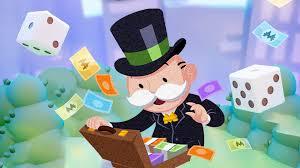
Anyone coming to Monopoly Go for the same old board-game slog is in for a surprise, and that's not really a bad thing. After a fair few weeks playing it on and off, I'd say it works best when you treat it as a quick mobile habit rather than a faithful remake. Even bits that feel familiar, like rolling dice and circling the board, are there to serve a much faster loop. If you've been hunting for event rewards or watching how people manage their dice during things like Racers Event slots buy discussions, you'll already know the app is built around timing, momentum, and short bursts of play, not drawn-out strategy sessions at the kitchen table.
The first thing you notice is how little time the game wastes. You roll, move, collect cash, and pour that money straight into landmarks. That's the core of it. There's no long debate over trades, no trying to trap your mate with a hotel on Mayfair, no slow burn where one person quietly takes over the board. Instead, each board is more like a step on a ladder. Finish the upgrades, move on, start again. It sounds repetitive on paper, but on a phone it clicks. You can play for two minutes while waiting for the kettle to boil and still feel like you've made progress.
The social stuff does a lot of the heavy lifting. Monopoly Go knows players like a bit of mischief, so it gives you bank heists, shutdown attacks, sticker trading, and all those little moments where you can mess with someone else's progress. It's not proper multiplayer in the old-school sense, but it creates that same cheeky tension. You hit a friend's landmark, they hit back later, and suddenly there's a mini rivalry going on. Then you add limited-time events, tournaments, and album rewards, and it becomes obvious why people log in several times a day. You're not just rolling dice. You're chasing windows of value before they disappear.
A lot of players assume it's all luck. It isn't. Luck matters, sure, but resource management matters more than people think. Burning every roll the second you get it is usually where things go sideways. The better approach is to wait for overlap between events, tournaments, and board bonuses, then push hard. That's when the game feels rewarding instead of stingy. I've also found that sticker albums quietly shape the whole experience. Some sessions are about cash, some are about shields, but a lot of the time you're really chasing missing stickers and extra dice. Once you clock that, the game makes more sense.
Monopoly Go works for players who want the flavour of Monopoly without the row over house rules or the three-hour commitment. It's lighter, cheekier, and much more engineered around daily engagement. That won't be everyone's cup of tea, but it knows exactly what it is. If you enjoy planning around events, saving resources, and squeezing more value out of each session, there's a decent rhythm to it. And if you're the sort of player who likes keeping up with item offers, dice support, or other game-related services, sites like RSVSR are often part of that wider mobile gaming routine rather than some odd extra tagged on at the end.