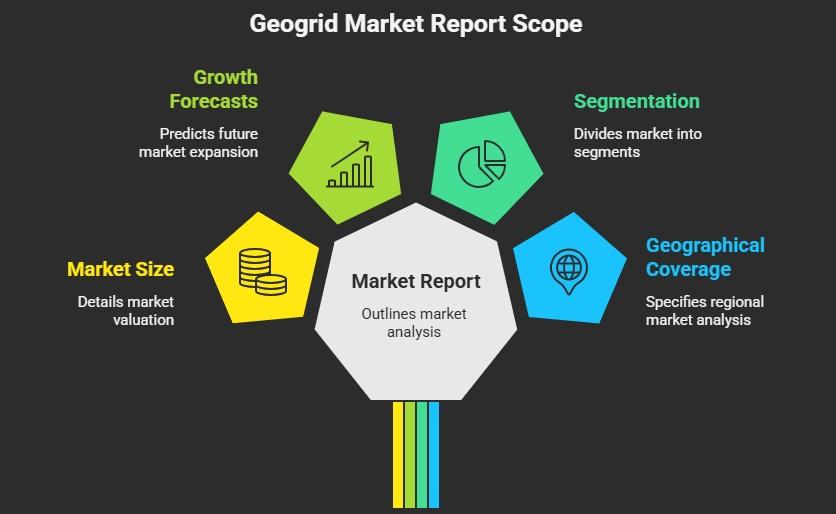
The Geogrid Market is gaining remarkable traction as infrastructure investments, sustainability goals, and advanced construction technologies drive demand for innovative soil reinforcement solutions. From stabilizing road subgrades to supporting massive civil engineering projects, geogrids are becoming indispensable in modern construction and infrastructure development. This comprehensive analysis explores market size, key growth drivers, regional dynamics, and future opportunities.
Market Overview & Forecast
The global Geogrid Market was valued at US$ 931.49 million in 2019 and is projected to reach US$ 2,079.02 million by 2028, growing at a CAGR of 9.4% from 2020 to 2028.
This growth trajectory signifies strong demand for geogrids across multiple infrastructure and soil stabilization applications. As governments and private sectors worldwide prioritize durable, cost-effective construction materials, geogrids offer an optimal blend of performance, sustainability, and lifecycle cost benefits.
Key Market Drivers
Several market forces are steering growth in the Geogrid Market:
- Infrastructure Development Boom
- Rapid expansion of highways, railways, bridges, and urban transport networks is fueling demand for geogrids, especially in emerging and developing markets.
- Public and private spending on infrastructure projects is increasingly aligning with lifecycle cost principles that favor soil reinforcement solutions like geogrids.
- Enhanced Soil Stabilization Needs
- Geogrids improve soil bearing capacity, reduce rutting, and prevent erosion — critical for road construction and retaining wall applications.
- Their usage in regions with weak subgrades significantly reduces maintenance costs over the lifespan of civil works.
- Sustainability & Lifecycle Benefits
- With heightened environmental regulations, construction firms are adopting geogrids to reduce resource use and carbon footprints.
- Geogrids made from recycled polymers and advanced composites support green building standards, making them attractive for eco-conscious developers.
Market Applications & Segmentation
The versatility of geogrids has expanded adoption across multiple application segments:
- Road Construction
- The largest application segment, where geogrids reinforce subbases, distribute load, and extend pavement life.
- Soil Reinforcement & Slope Stabilization
- Geogrids help stabilize embankments, cut slopes, and retaining walls, enhancing structural integrity.
- Railroad & Industrial Projects
- In railroad ballast stabilization and heavy industrial grounds, geogrids improve load distribution and reduce maintenance cycles.
Regional Market Highlights
The Geogrid Market exhibits diverse dynamics across regions:
- Asia-Pacific
- Dominates in volume due to rapid urbanization and infrastructure spending in China, India, and Southeast Asia.
- The region’s growth is underpinned by government initiatives, large-scale road projects, and cost-efficient construction strategies.
- North America
- Holds a substantial market share, driven by infrastructure revitalization programs and sustainable construction mandates.
- Europe
- Mature market with steady investments in sustainable civil works and environmental protection measures.
Emerging Trends in the Geogrid Market
Technological Innovations
- Smart geogrids with embedded sensors and hybrid geosynthetic systems are emerging. These innovations enhance real-time monitoring and structural resilience, thus presenting value-added opportunities.
Material Advancements
- High-density polyethylene (HDPE), polypropylene (PP), and polyester remain dominant materials, offering excellent tensile strength, low elongation, and chemical resistance.
- Recycled polymer geogrids are gaining popularity due to sustainability initiatives.
Shift Toward Composite Solutions
- Combined geogrid-geotextile solutions are increasingly specified in complex soil conditions, offering dual reinforcement and drainage functionalities.
Challenges & Market Restraints
Despite strong prospects, the Geogrid Market faces some headwinds:
- Raw Material Price Volatility
- Fluctuating costs of HDPE and PP impact pricing and margin stability for manufacturers.
- Awareness & Standardization Gaps
- In some emerging markets, limited awareness and lack of standardized design codes slow adoption.
Strategic Recommendations for Stakeholders
To capture growth opportunities in the Geogrid Market:
- Invest in R&D for advanced composites and smart reinforcement systems.
- Focus on emerging markets with tailored solutions and training programs.
- Collaborate with infrastructure developers to integrate geogrids into early design phases.
- Educate specifiers and engineers through demonstration projects and performance data.
The Geogrid Market is poised for significant expansion as global infrastructure needs, cost pressures, and sustainability trends converge. Businesses that innovate and align with long-term civil engineering goals are well-positioned to capitalize on this dynamic market.
 English
 Arabic
 French
 Spanish
 Portuguese
 Deutsch
 Turkish
 Dutch
Dutch
 Italiano
 Russian
 Romaian
 Portuguese (Brazil)
 Greek
Greek