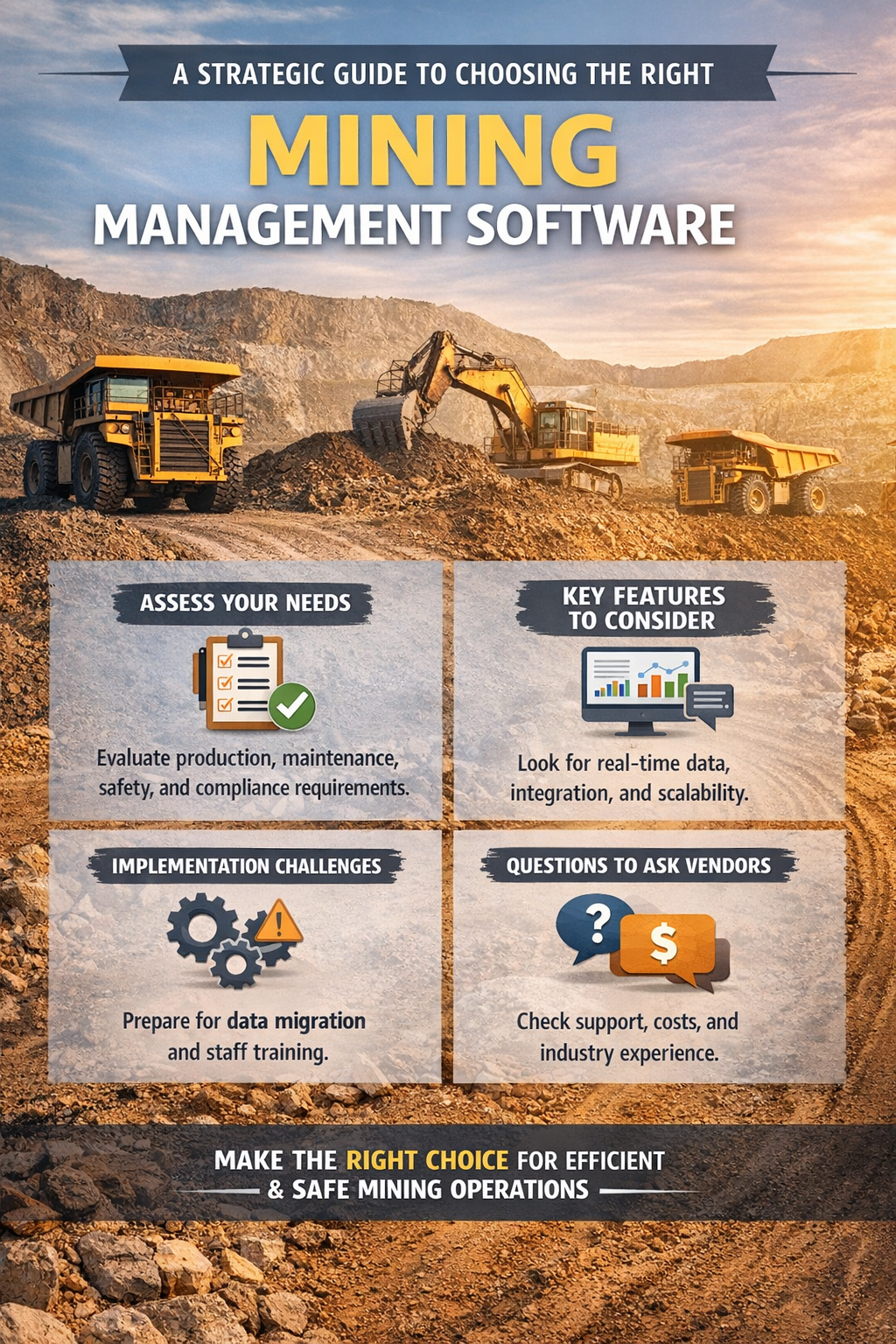
The future of mining is not being carved only by machines in the ground but by data flowing through systems above it.
Mines today are no longer driven only by heavy equipment and manual supervision. They are driven by connected systems, real time insights, and intelligent decision making tools. As operations grow more complex and safety standards become stricter, companies are turning to digital systems to stay competitive. This is where mining industry software plays a powerful role.
In this blog, we will explore the essential features that define modern mining systems, from IoT connectivity to automation. The goal is to understand what truly matters and why these capabilities are shaping the next generation of mining operations.
Core Digital Foundations of Modern Mining Systems
Real Time Data Collection and Monitoring
One of the most important features of modern mining industry software is real time data collection. Sensors placed on equipment, vehicles, and processing units continuously gather information about performance, temperature, pressure, fuel usage, and more. This data is transmitted instantly to central dashboards where teams can monitor operations live.
Real time visibility helps managers detect problems early, reduce downtime, and improve safety. Instead of waiting for reports at the end of a shift, decision makers can act immediately. This reduces unexpected breakdowns and ensures smoother production cycles across the site.
IoT Enabled Equipment Integration
Internet of Things technology connects machines, vehicles, and control systems into one digital network. With IoT integration, every piece of equipment communicates its status and performance automatically. This creates a connected ecosystem where data flows seamlessly between field devices and management platforms.
Mining industry software that supports IoT allows teams to track asset health, manage fleet movement, and monitor environmental conditions. It brings transparency to operations and reduces manual tracking errors. Over time, this connectivity improves operational discipline and strengthens accountability across departments.
Centralized Operations Dashboard
Modern mines generate vast amounts of information. Without a unified view, data becomes overwhelming. A centralized dashboard simplifies this by presenting key metrics in a clear and structured way. Production output, equipment status, safety alerts, and workforce allocation can all be viewed in one place.
This feature helps leadership teams make faster and more informed decisions. It also improves coordination between departments such as maintenance, logistics, and processing. A well designed dashboard turns complex data into practical insights that drive measurable improvements.
Cloud Based Data Storage
Cloud technology has transformed how mining data is stored and accessed. Instead of relying on local servers that limit accessibility, cloud based systems allow authorized users to access information from anywhere. This is especially valuable for companies operating multiple sites across regions.
Mining industry software that uses cloud infrastructure ensures secure data backup and scalability. As operations expand, the system can handle growing data volumes without major infrastructure upgrades. Cloud storage also supports collaboration between on site teams and remote experts.
Mobile Accessibility for Field Teams
Mining operations often span large and remote areas. Mobile access enables supervisors and technicians to receive updates, report issues, and review performance data directly from their devices. This reduces dependency on control rooms and paper based reporting.
When mining industry software includes mobile capabilities, communication becomes faster and more reliable. Field teams can upload inspection reports, capture images, and update maintenance logs instantly. This improves transparency and reduces delays caused by manual processes.
Data Security and Access Control
As mining becomes more digital, protecting sensitive operational data becomes critical. Modern systems include strong access control features that define who can view, edit, or analyze specific information. This prevents unauthorized access and reduces cybersecurity risks.
Mining industry software must prioritize encryption and secure authentication methods. With proper data security measures, companies can confidently adopt digital transformation without exposing themselves to operational or financial risks.
Advanced Intelligence and Automation Capabilities
Predictive Maintenance Analytics
Unexpected equipment failure can disrupt production and increase costs significantly. Predictive maintenance uses historical and real time data to forecast when a machine is likely to fail. This allows maintenance teams to schedule repairs before breakdowns occur.
Mining industry software equipped with predictive analytics reduces downtime and extends asset life. Instead of reacting to problems, companies shift to a proactive strategy. This not only lowers repair costs but also enhances overall operational stability.
Automated Workflow Management
Manual processes often create delays and inconsistencies. Automated workflow tools streamline approvals, maintenance scheduling, and reporting tasks. Once predefined rules are set, the system handles repetitive tasks automatically.
Mining industry software that supports workflow automation reduces administrative burden and human error. Teams spend less time on paperwork and more time focusing on strategic improvements. Automation ensures that critical processes are completed on time and with consistency.
Fleet Management and Optimization
Heavy vehicles such as trucks and loaders are central to mining operations. Managing them efficiently can significantly impact productivity and fuel consumption. Modern systems track vehicle movement, idle time, and route efficiency in real time.
Mining industry software with fleet optimization features helps managers reduce fuel waste and improve scheduling. By analyzing usage patterns, companies can allocate vehicles more effectively and lower operational costs over the long term.
Safety Monitoring and Risk Alerts
Mining environments can be hazardous. Advanced systems monitor environmental factors such as gas levels, temperature, and structural stability. When risk thresholds are exceeded, alerts are generated instantly to warn personnel.
This feature improves safety compliance and reduces accident risks. Mining industry software that integrates safety monitoring builds a culture of prevention rather than reaction. Workers feel more secure knowing that systems continuously track potential dangers.
Production Planning and Resource Allocation
Effective planning ensures that resources such as manpower, machinery, and materials are used efficiently. Modern systems analyze production data and forecast demand to create optimized schedules. This reduces waste and prevents bottlenecks.
Mining industry software enables better alignment between planning and execution. Managers can adjust schedules based on real time insights, ensuring that targets are met without overloading equipment or staff.
Integration with Software Development for Custom Solutions
Every mining site has unique operational challenges. Off the shelf systems may not address all specific needs. Integration with software development processes allows companies to customize features according to their workflow.
Mining industry software that supports customization enables long term flexibility. Through tailored software development, companies can add modules, refine analytics, and adapt the system as operations evolve. This ensures that technology grows alongside business demands.
Conclusion
Mining is no longer only about extracting resources from the earth. It is about extracting value from data. Modern mining industry software combines IoT connectivity, real time monitoring, automation, and predictive analytics to create smarter and safer operations.
From centralized dashboards to predictive maintenance and customized software development, each feature plays a role in improving efficiency and reducing risk. Companies that embrace these capabilities are better prepared to handle industry challenges and remain competitive in a rapidly evolving landscape.
Digital transformation in mining is not a future concept. It is happening now. Understanding these essential features is the first step toward building resilient and intelligent mining operations.
FAQs
What is mining industry software used for
Mining industry software is used to manage operations, monitor equipment, track production, enhance safety, and analyze performance data. It helps companies improve efficiency, reduce downtime, and make informed decisions based on real time insights.
How does IoT improve mining operations
IoT connects equipment and sensors to centralized systems. This allows continuous monitoring of machinery and environmental conditions. With connected devices, managers receive instant updates and can respond quickly to potential issues.
Why is predictive maintenance important in mining
Predictive maintenance reduces unexpected breakdowns by analyzing equipment data and forecasting potential failures. This helps companies schedule repairs in advance, minimize downtime, and extend asset life.
Can mining systems be customized
Yes, many modern systems support customization through software development. This allows companies to adapt features according to specific site requirements and operational workflows.
Is cloud technology safe for mining data
Cloud platforms offer strong security measures such as encryption and access control. When implemented correctly, cloud based mining industry software provides secure and scalable data management solutions.
 English
 Arabic
 French
 Spanish
 Portuguese
 Deutsch
 Turkish
 Dutch
Dutch
 Italiano
 Russian
 Romaian
 Portuguese (Brazil)
 Greek
Greek