English
 Arabic
 French
 Spanish
 Portuguese
 Deutsch
 Turkish
 Dutch
Dutch
 Italiano
 Russian
 Romaian
 Portuguese (Brazil)
 Greek
Greek
PREVIEW: Blackhawks Host Senators inside of Saturday Matinee
Music |
2025-12-15 02:41:33
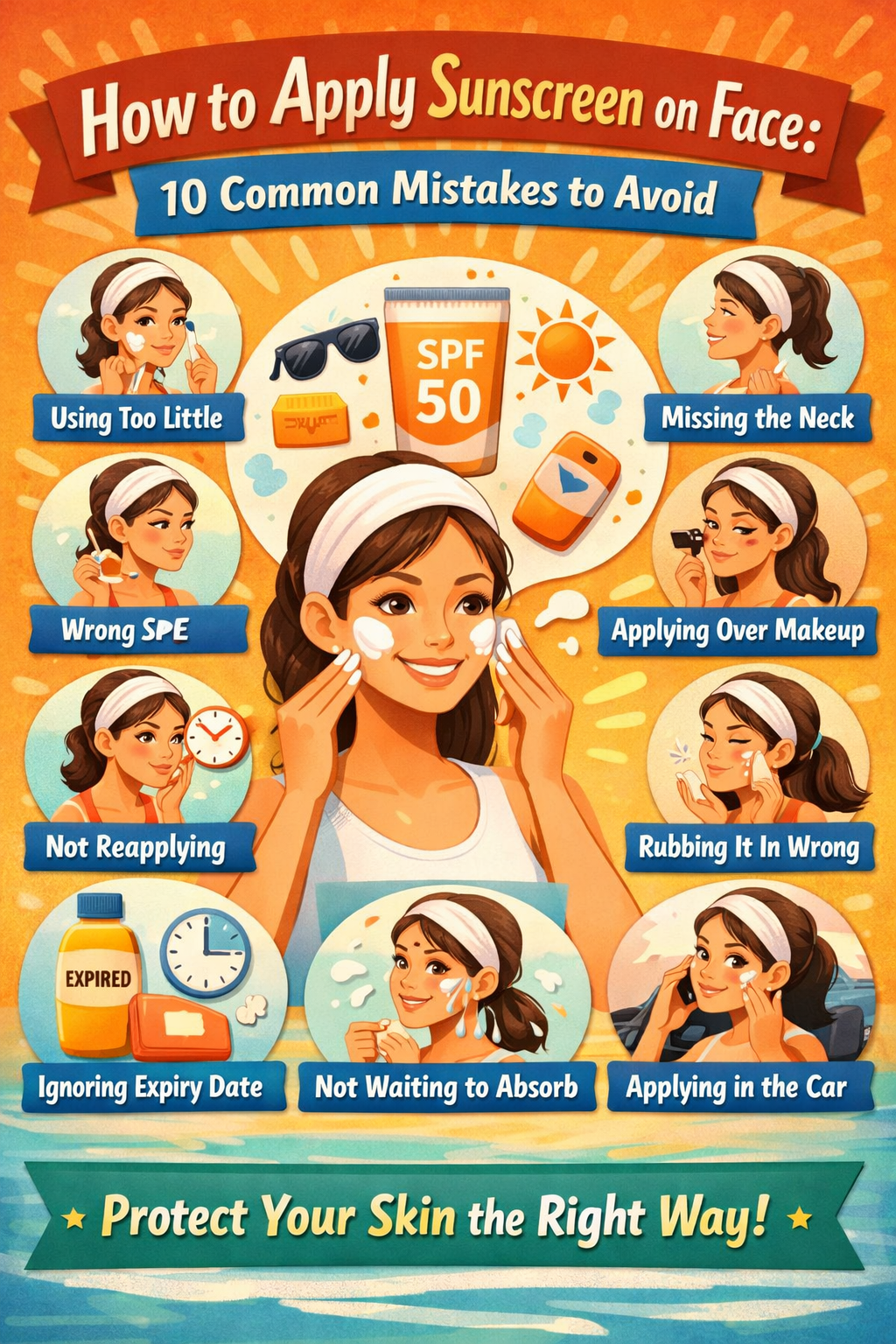
Taking care of your skin from the sun is a very important aspect of any skin care routine. In using sunscreen for face properly you also prevent premature aging as well as protect against pigmentation, sunburn, and long term skin damage.
In spite of using the best skin care products, improper application of sunscreen voids it out. In this guide we will go over how to apply sunscreen properly and also bring to light 10 common mistakes to avoid as well as expert tips, benefits and FAQs.
Facial skin is a very delicate tissue which is thicker than that of the body and is constantly exposed to the sun. The primary cause of premature aging, wrinkles, pigmentation and even skin cancer is UV rays. There are 2 kinds of UV rays which affect your skin:.
Daily use of Sunscreen For Face provides a protective layer which in turn allows your best skin care products to do better. If you aren’t protected, all your skin care efforts may be in vain.
Applying sunscreen properly gives you the best protection. Here’s what to do:.
Cleanse your face: Use a mild cleanser that is best for your skin type.
Apply serum & moisturizer: Prepare your skin; what you put on after your sunscreen is makeup.
Measure the right amount: Use the "two finger method" apply sunscreen between your index and middle finger.
Dot evenly: Apply to your forehead, cheeks, nose, chin and neck.
Gently blend: Avoid rough motion; use smooth circular.
Wait before sun exposure: Allow the sunscreen to absorb for 10 15 minutes.
Reapply every 2 hours: Sure, here is a paraphrase of the given text: Also if at outdoor events, sweating, or in the pool.
|
Step |
Product |
Purpose |
Tips |
|
1 |
Cleanser |
Removes dirt, oil, and impurities |
Choose gentle, pH-balanced formula |
|
2 |
Toner (Optional) |
Balances skin |
Alcohol-free for sensitive skin |
|
3 |
Serum |
Targets specific concerns |
Vitamin C works well for morning |
|
4 |
Moisturizer |
Hydrates skin |
Choose according to skin type |
|
5 |
Sunscreen For Face |
UV protection |
Apply generously, even on neck & ears |
|
6 |
Makeup |
Cosmetic coverage |
Only after sunscreen sets (~10 mins) |
|
Skin Type |
Recommended Formula |
SPF |
Finish |
|
Oily Skin |
Gel-based, oil-free |
30–50 |
Matte |
|
Dry Skin |
Cream-based, hydrating |
30–50 |
Dewy |
|
Sensitive Skin |
Mineral sunscreen |
30+ |
Lightweight |
|
Acne-Prone |
Non-comedogenic |
30–50 |
Oil-free |
|
Combination |
Lightweight lotion |
30+ |
Natural finish |
Many people think that they use enough sunscreen. What they don’t know is that using too little does not deliver the SPFs’ full protection and in turn leaves your skin vulnerable. Try the two finger method for full coverage.
Even on gray days out, UV rays make their way through the cloud. Up to 80% of them reach your skin, that is why we put on sunscreen every day.
Sunscreen should always be applied before makeup. Foundation or BB cream on top of sunscreen is fine, but never the other way around. Correct order: Cleanser → Serum → Moisturizer → Sunscreen → Makeup.
Sunscreen is good for 2 to 3 hours which is why you should reapply it while you are out, after you sweat, or at water. For an easy touch up try makeup friendly SPF sprays and powders.
Sun damage doesn’t just affect the face. Your neck, ears, and hairline which are very exposed have a high risk of aging. Include these areas in your sunscreen application.
SPF 15 is not enough for daily protection. It is recommended by dermatologists that you use SPFs of 30 or greater for regular use and 50+ for extended sun exposure.
Broad spectrum sunscreens protect against UVA and UVB rays. Without it your skin may still age prematurely if you don’t get sunburn.
Aggressive rubbing of the skin may cause irritation and uneven coverage. Dot and blend your sunscreen for full protection.
Makeup with SPF is not enough for proper protection which you would have to put on in very large amounts. Also use a separate Sunscreen For Face.
In terms of skin types, for oily you want gel based, non oil products, for dry we recommend hydrating creams. Also for sensitive skin it is better to use mineral sunscreens. The right product will ensure that you get the best out of your skin care routine.
Proper use of products in your skincare routine is what will see your skin at its best health and radiance.
Following these tips ensures comprehensive protection.
A: Use the double finger method to cover the full face, neck, and ears.
A: No. UV rays will pass through glass which means it’s a daily requirement.
A: Yes, SPF 30 blocks out the major part of UVB rays. For very long term outdoor exposure use SPF 50.
A: Moisturizer should be the base step which sunscreen is applied on for best results.
A: Non irritating and oil free formulas for acne prone skin.
A: Every 3 hours outdoors or after sweat and swim.
Applying Sunscreen For Face is an easy yet very effective step in skin care. Many folks put in the time to find the best products for their skin but ignore proper sun protection which in turn nullifies their investment. By the 10 common errors which this guide puts forth you can avoid and have healthy, radiant, young looking skin for years.
Remember that you use the right product for your skin which is a broad spectrum choice, apply it to all exposed areas including your neck and ears and reapply every 2 hours while out. Also by integrating sunscreen into your routine you maximize the results of your other skin care products which in turn prevents premature aging, sunburn, dark spots and long term damage.
Daily use of sunscreen is a must your skin will thank you!