English
 Arabic
 French
 Spanish
 Portuguese
 Deutsch
 Turkish
 Dutch
Dutch
 Italiano
 Russian
 Romaian
 Portuguese (Brazil)
 Greek
Greek
Rapid Emergency Appliance Repair Solutions in Johns Creek
Home |
2026-02-09 19:19:57
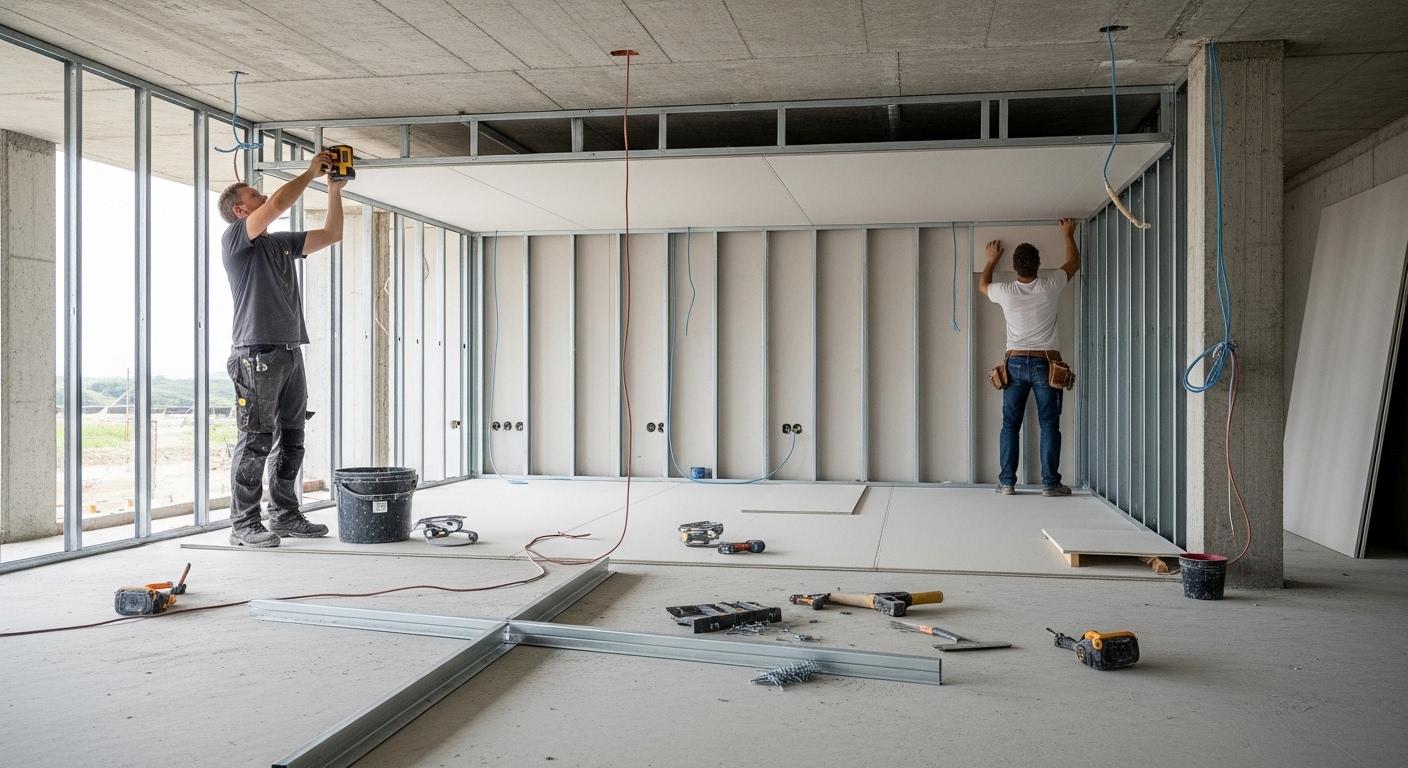
Gypsum board ceilings, also known as drywall or plasterboard ceilings, are widely used in modern construction due to their smooth finish, fire resistance, and ease of installation. They are clean and have a beautiful appearance, as well as being able to integrate lighting, HVAC, and decoration design. Ceilings of gypsum boards are very important in estimating budgets, resources, and the timeframes of completing a project.
Many contractors rely on professional estimating service to generate accurate takeoffs, ensure materials are correctly ordered, and prevent cost overruns. Using such services ensures precise calculations of ceiling area, board quantities, supporting frameworks, labor, finishing materials, and contingencies, giving homeowners and project managers a reliable cost overview before work begins.
The initial stage in estimating the requirements of the gypsum boards is to measure the ceiling correctly.
How to Measure:
Measure the width and the length of the room.
Length multiplied by width to get the total area of the ceiling.
In case of irregular or L-shaped ceilings, one breaks the space into rectangles, finds the area of each rectangle, and adds them.
Example:
Space in the room: 25 ft by 20 ft = ceiling = 500 sq. ft.
Normal gypsum boards have dimensions 4 ft x 8 ft (32 sq. ft.). Divide the required amount by the number of boards required:
Formula:
[boards = total ceiling area/ board area.]
Example:
Ceiling area: 500 sq. ft.
Board size: 32 sq. ft.
[500 divided by 32 = 15.6/16 boards, rounded to 16 boards.]
Add 5-10% additional boards in cuts, corners, and wastes.
Gypsum boards are in need of support, which is usually provided by furring channels of metal or wooden battens.
Metal furring: It is very durable, resistant to fire, and easy to align.
Wooden battens: These are cheap, but can be affected by moisture or warp.
Divide out the required framework:
Main runners: This is normally 4 ft spacing along the length of the room.
Cross furrings: Separated by 2 ft in width of 4 ft by 8 ft boards.
Wall angles: Perimeter support.
Proper measurement of the framework will guarantee its adequate support as well as avoid sagging and cracking of boards.
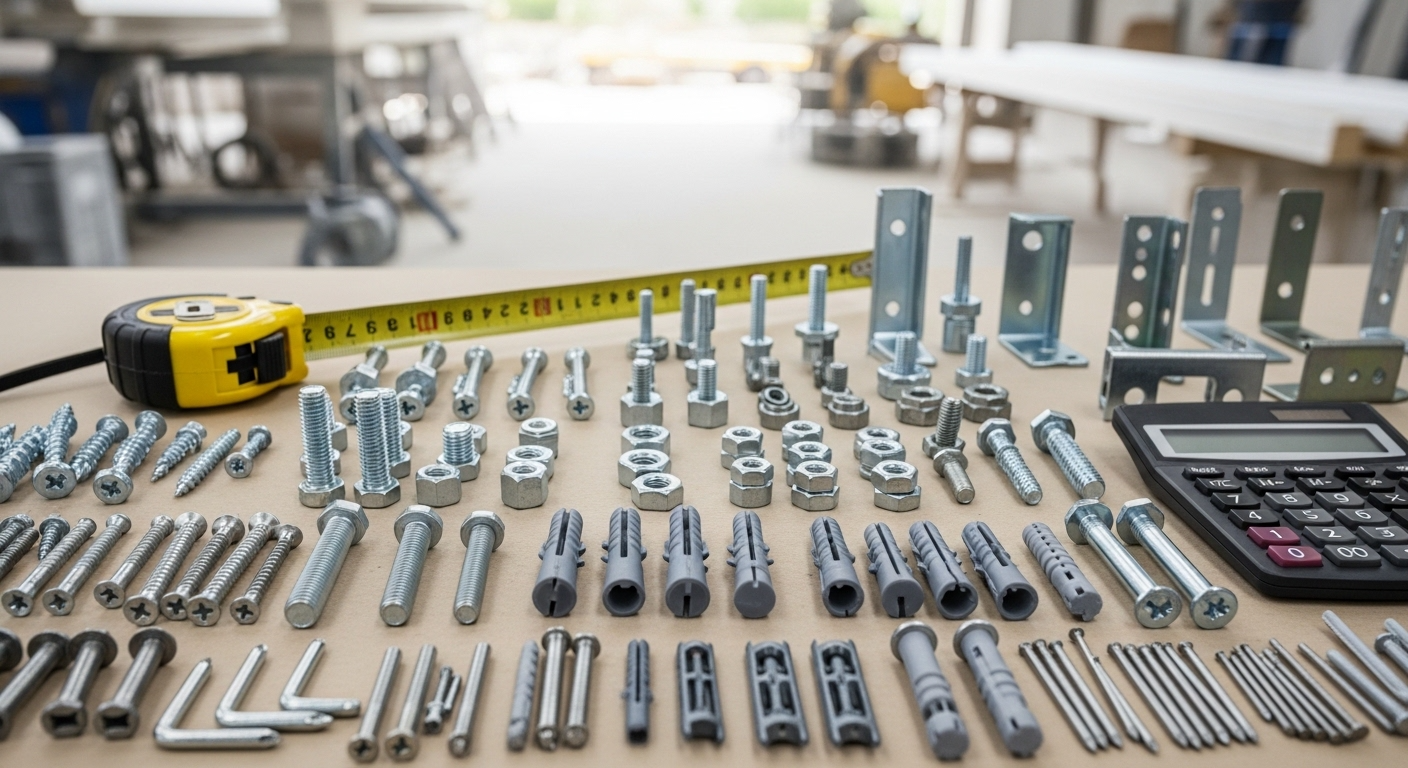
To fix gypsum boards on the framework, you will require screws, nails, or anchors:
Screws: Generally 6 -8 per 4 ft-8 ft board.
Anchors: Metal furring: 1 per hanger.
Extra: always add 10% more wastage.
This makes the ceiling well fixed and eliminates future sagging or structural problems.
And, in case you have lights or AC or smoke detectors on your ceiling, include them in your estimate:
Unless otherwise specified, subtract the area of large openings from the total ceiling area.
Factor in extra cuts and finishes around openings, which involve extra work and may need extra boards.
The tall ceilings need scaffolding, ladders, or lifts, which adds to the cost of labor and the time of installation.
Normal ceilings: 8-10 ft =Normal labor productivity.
Huge ceilings: >10 ft → More labor hours, security.
These are the factors to be considered in your labor estimate to get the right cost estimation.
The size of a ceiling, its height, and difficulty (e.g., curves or false ceilings) affect labor:
Normal productivity: 100- 150 sq. ft. / hour with typical installation.
Labor cost: Times number of estimated hours x hourly wage.
Allow time to install frameworks, fix gypsum boards, joint and sanding, and finishing.
Example:
Ceiling area: 500 sq. ft.
Productivity: 125 sq. ft./hour = 500/125 =4 hours.
Labor rate: $50/hour → 4 × 50 = $200
Extra hours on the complicated designs or high ceilings.
Gypsum boards after installation need:
Joint taping and mudding: Covers junctions between boards.
Sanding: Prepares the surface to be painted.
Primer and paint: Fits the current decor and coats the ceiling.
Material Costs:
Compound joint: $15- 20 per 5-gallon bucket.
Tape: $3–$5 per roll
Sandpaper: $5–$10 per pack
Paint: $15–$30 per gallon
Final labor: 1–2 hours based on the area and texture of the ceiling.
Never forget about unforeseen problems:
Wastage of materials: 5-10% additional boards, compound, and paint.
The installation was slightly damaged.
Modifications due to openings or a strange ceiling design.
Adding contingency means that you have estimated the entire scope of the project, and no surprises arise.
Ceiling Area: 500 sq. ft.
Gypsum Boards: 16 boards and 2 more to cut it + 2 to be cut + 2 to be cut = 18 boards.
Framework: Metal furring channels and wall angles.
Fasteners: 150 screws + 10% extra
Labor: 4-6 hours → $200-$300
Jointing and Finishing Materials: $50 to $70.
Total Estimate: $400-500 (Depending on the cost of materials in and around, and labor rates)
This gives it a sound foundation of budgeting and purchasing.
Check Manufacturer Rules: Do not overload or under-space boards.
Take into account Ceiling Design: False and complex layouts raise materials and labor.
Fixtures: Openings Lights, vents, and other fixtures influence board quantity.
Add Contingency: Insures against wastes, errors, or changes of design.
Schedule Work: High ceilings/Detailed work needs more time and skills.
Gypsum board ceiling estimation is critical in the smooth running of a project, budget control, and quality output. Through the calculation of the ceiling area, board and framework requirements, such as fasteners, labor, finishing, and fudge factors, the contractors and the homeowners can be able to make accurate estimates. Consideration of ceiling height, openings, and special designs is all that guarantees a full picture of the material and labor requirements. This will not only save money on budget overruns, but it will also save time on installation delays and provide a high-quality, durable, and appealing ceiling.
Good planning and estimation are important for efficient and cost-effective gypsum board ceiling installations in any given residential or commercial project.
Take the total area of the ceiling divided by the area of one board (typically 32 sq. ft.), add 5-10 percent cuts and waste.
Yes. Final works involve joint taping, mud application, sanding, and painting, which are required to make the ceiling smooth and professional.