English
 Arabic
 French
 Spanish
 Portuguese
 Deutsch
 Turkish
 Dutch
Dutch
 Italiano
 Russian
 Romaian
 Portuguese (Brazil)
 Greek
Greek
Hasen Shower Drain Cover Supplier Insights from HASEN-HOME
Crafts |
2026-01-15 01:55:13
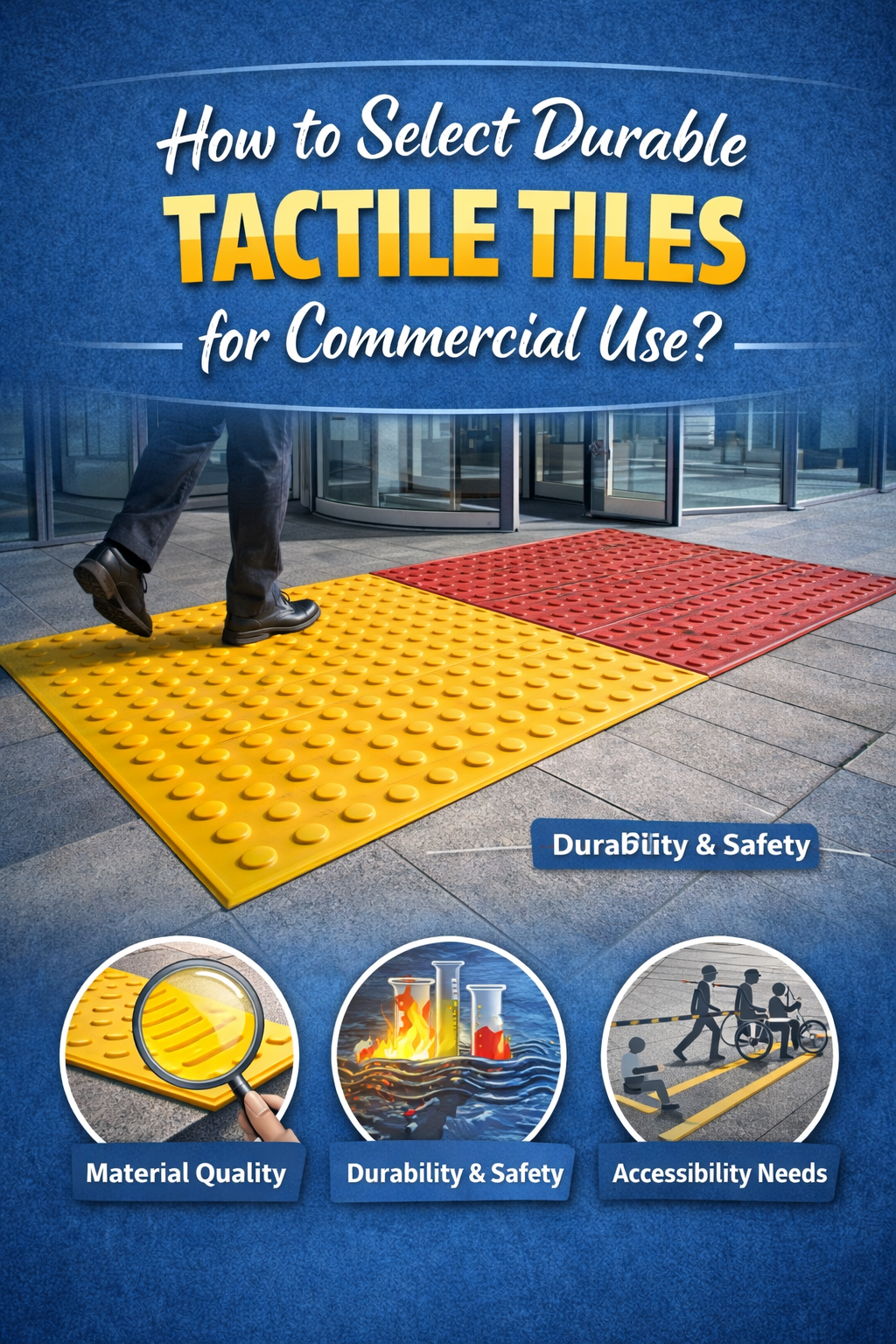
Accessibility and pedestrian safety are critical considerations in modern commercial infrastructure. From shopping malls and airports to hospitals and metro stations, public spaces must be designed to accommodate everyone including visually impaired individuals. One of the most effective solutions for improving navigation and safety is the installation of high-quality Tactile Tiles.
However, not all Tactile Tiles are suitable for commercial environments. Commercial areas experience heavy foot traffic, environmental exposure, and constant wear. Selecting durable Tactile Tiles requires careful evaluation of materials, design standards, load capacity, and long-term performance.
In this comprehensive guide, we will explain how to select durable Tactile Tiles for commercial use, key factors to consider, and how the right choice improves safety and compliance.
Tactile Tiles are specially designed textured surface indicators installed on walkways to guide visually impaired individuals. These tiles contain raised patterns such as dots or bars that can be detected by foot or cane.
They are commonly installed at staircases, ramps, pedestrian crossings, metro platforms, elevators, and building entrances.
Commercial spaces are high-traffic environments. Thousands of people may walk over tactile surfaces daily. Poor-quality tiles can crack, fade, or detach, creating safety hazards instead of preventing them.
Investing in durable materials ensures long-term safety and cost efficiency.
Material is the most important factor affecting durability.
For commercial use, rubber and polyurethane are often preferred because they provide flexibility, impact resistance, and anti-slip performance.
Commercial spaces must prioritize anti-slip performance, especially in areas exposed to water or moisture.
Slip resistance reduces the risk of accidents in public spaces such as hospitals and transport stations.
In commercial settings, tactile surfaces must handle:
Durable Tactile Tiles should maintain shape and texture even under heavy loads without flattening.
Tile thickness directly affects durability.
Thicker tiles typically offer better wear resistance and impact durability.
Outdoor commercial areas require tiles that withstand:
UV-resistant Tactile Tiles prevent fading and cracking, ensuring long-term visibility and effectiveness.
Different environments require different tactile solutions.
These feature long raised bars that guide movement in a straight path.
These contain raised dome patterns that signal hazards or stopping points.
Used in premium commercial projects for enhanced durability and modern aesthetics.
Commercial infrastructure must comply with accessibility guidelines. While regulations vary by region, most public projects require tactile indicators to meet specific design standards.
Compliance ensures inclusivity and avoids legal complications.
Even the most durable Tactile Tiles can fail if poorly installed.
Professional installation ensures longevity and performance.
Durable Tactile Tiles should require minimal maintenance.
Low-maintenance tiles reduce long-term operational costs.
Modern commercial projects require both functionality and visual appeal.
Proper color contrast enhances safety while maintaining design consistency.
Tactile safety systems are often part of a broader pedestrian and traffic management plan. In large commercial complexes and infrastructure projects, they are combined with reflective systems, lane indicators, and traffic control products.
For example, many infrastructure developers also work with a trusted Road Studs Manufacturer in Pakistan to install reflective road studs alongside pedestrian guidance systems. Road studs improve nighttime visibility for drivers, while Tactile Tiles enhance pedestrian navigation.
Together, these solutions create a complete and integrated safety environment for both vehicles and pedestrians.
Avoiding mistakes ensures long-term durability.
Investing in quality reduces replacement frequency and enhances safety.
While budget considerations are important, commercial buyers should focus on total lifecycle cost rather than initial price.
Higher upfront investment often results in greater long-term savings.
High-quality rubber or polyurethane materials are ideal for commercial use due to their flexibility, durability, and slip resistance.
Durable Tactile Tiles can last between 5–10 years or more depending on traffic levels and environmental exposure.
Many commercial and public buildings require tactile indicators to comply with accessibility and safety standards.
Yes, provided they are UV-resistant, weatherproof, and designed for outdoor conditions.
Commercial infrastructure represents long-term investment. Safety features such as Tactile Tiles directly impact user experience, accessibility compliance, and brand reputation.
Choosing high-quality products demonstrates commitment to public safety and responsible infrastructure development.
Selecting durable Tactile Tiles for commercial use requires careful consideration of material quality, slip resistance, thickness, load capacity, installation standards, and environmental conditions. High-traffic commercial spaces demand products that can withstand continuous use while maintaining safety performance and visibility.
By investing in premium Tactile Tiles, commercial developers and facility managers ensure long-term durability, regulatory compliance, and enhanced public safety. When integrated with complementary infrastructure solutions such as reflective systems from a trusted Road Studs Manufacturer in Pakistan these tiles contribute to a complete and effective safety framework.
Making the right choice today ensures safer, more accessible commercial spaces for years to come.