English
 Arabic
 French
 Spanish
 Portuguese
 Deutsch
 Turkish
 Dutch
Dutch
 Italiano
 Russian
 Romaian
 Portuguese (Brazil)
 Greek
Greek
What Role Does BK Control Transformer Factory Play in Modern Panels?
Shopping |
2026-01-04 07:59:24
Hardwood flooring is one of the most beautiful and durable flooring options used in homes today. Many homeowners prefer hardwood floors because they bring warmth, elegance, and natural character to living spaces. Whether installed in living rooms, bedrooms, or hallways, hardwood flooring adds long-term value to a home. However, maintaining the natural beauty of wood floors requires proper care and cleaning.
Choosing the best hardwood floor cleaner is one of the most important steps in protecting wooden floors. Hardwood surfaces are different from tile or laminate floors because they are made from natural wood. This means they can react to moisture, harsh chemicals, or rough cleaning tools. Using the wrong cleaning product may damage the protective finish, reduce the shine, or even cause discoloration over time.
Many homeowners make the mistake of using general-purpose cleaners or excessive water while cleaning hardwood floors. While these methods may remove dirt temporarily, they can slowly damage the wood surface if used repeatedly. Hardwood flooring usually has a protective finish such as polyurethane, oil, or wax that helps protect the wood from stains and scratches. If this protective layer is weakened, the wood beneath becomes more vulnerable to damage.
This is why selecting the best hardwood floor cleaner is essential. A good cleaner removes dirt, grease, and stains without harming the protective finish. It also helps maintain the natural shine of the wood while preventing residue buildup.
Hardwood flooring is made from natural wood planks that are cut from trees such as oak, maple, walnut, or cherry. Each piece of wood has its own grain pattern and color variations, which gives hardwood flooring its unique appearance. Unlike synthetic flooring materials, hardwood floors are natural and require careful maintenance.
One important feature of hardwood flooring is the protective finish applied to the surface. This finish acts as a barrier between the wood and everyday elements such as dirt, moisture, and foot traffic. Without this protective layer, the wood could easily absorb liquids and become damaged.
For example, if water spills on unfinished wood, it may quickly soak into the surface and cause stains or swelling. However, a finished hardwood floor can resist moisture for a short period of time because the protective coating blocks it.
Even though hardwood floors are durable, they can still be scratched by dirt particles, furniture movement, or rough cleaning tools. This is why gentle cleaning methods and suitable products are essential.
Proper cleaning not only keeps hardwood floors looking attractive but also helps maintain their durability. Over time, dust and dirt accumulate on the floor surface. When people walk across the floor, these small particles can create friction and cause scratches.
For example, sand or small stones brought in from outside may act like sandpaper when stepped on repeatedly. If these particles are not removed regularly, they may slowly damage the floor’s protective finish.
Using the best hardwood floor cleaner helps remove dirt safely while protecting the surface of the floor. Regular cleaning also prevents stains and sticky residue from building up over time.
Water-based cleaners are among the most commonly used products for hardwood floors. These cleaners contain a balanced mixture of water and gentle cleaning agents designed to dissolve dirt and grease.
One advantage of water-based cleaners is that they are lightweight and easy to use. They usually evaporate quickly, which reduces the risk of moisture damage.
For example, if a kitchen floor has grease stains from cooking, a water-based cleaner can break down the grease and allow it to be wiped away easily.
When choosing the best hardwood floor cleaner, many homeowners prefer water-based formulas because they clean effectively without leaving heavy residue.
Some homeowners prefer natural cleaners made from plant-based ingredients. These products often avoid harsh chemicals and synthetic fragrances.
Natural cleaners may contain ingredients derived from plants that help remove dirt and maintain the floor’s shine. They are often chosen by people who want a more environmentally friendly cleaning option.
For instance, a natural cleaner may remove dust and light stains while leaving a fresh scent without strong chemicals.
However, even natural products should be used according to instructions to avoid excessive moisture on the floor.
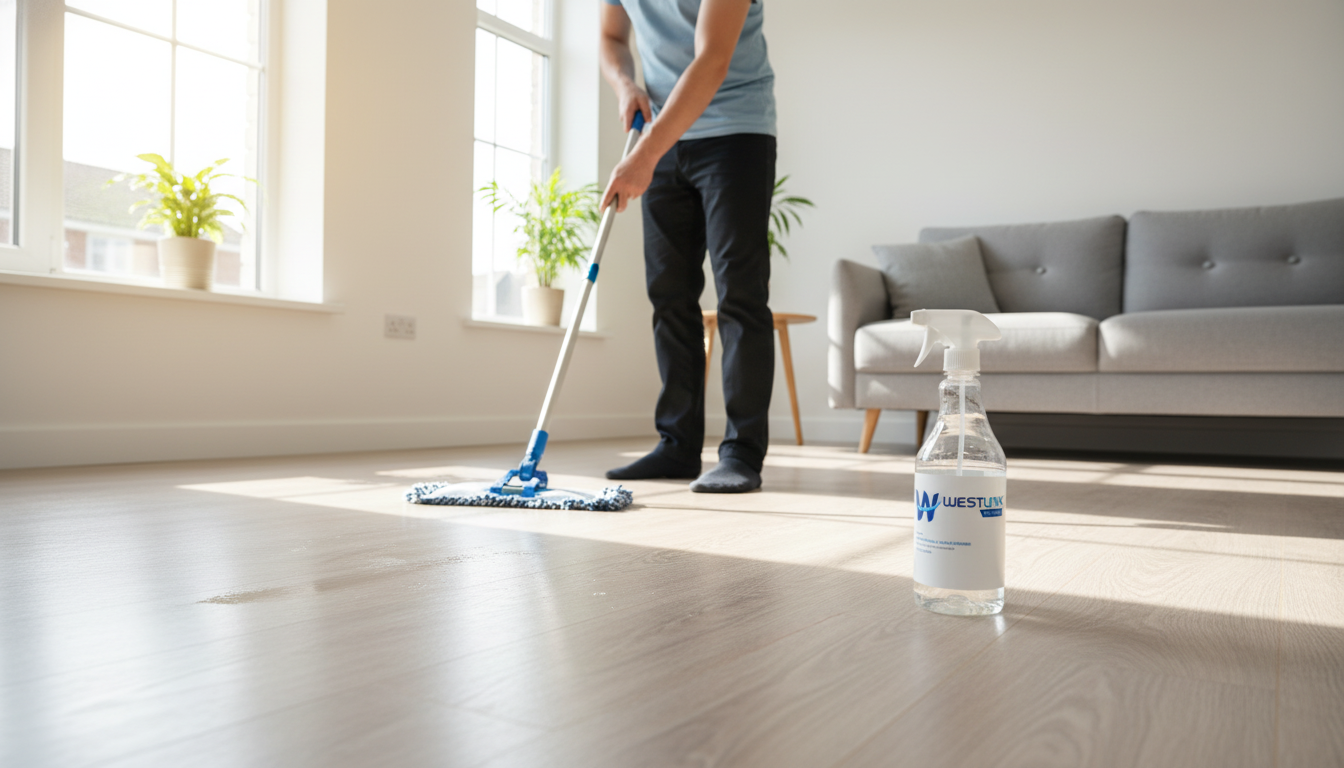
Spray cleaners are another popular option for hardwood floors. These products come in ready-to-use bottles that allow users to spray the cleaner directly onto the floor surface.
This type of cleaner is especially useful for quick cleaning tasks such as removing spills or footprints.
For example, if juice or coffee spills on the floor, a spray cleaner can be applied immediately and wiped away with a microfiber cloth.
Many people consider spray cleaners to be among the best hardwood floor cleaner options for everyday maintenance because they are convenient and easy to use.
A good hardwood floor cleaner should clean the floor without damaging the protective finish. The finish is responsible for protecting the wood from scratches, stains, and moisture.
For example, cleaners that contain harsh chemicals may slowly weaken the protective layer. Over time, this can make the floor appear dull.
The best cleaners are formulated with mild ingredients that remove dirt while keeping the finish intact.
Moisture is one of the biggest concerns when cleaning hardwood floors. Excess water can seep into the wood and cause swelling or warping.
A quality cleaner usually dries quickly after application. This helps reduce the amount of moisture left on the floor.
For instance, a quick-drying cleaner allows homeowners to clean floors without worrying about water damage.
Another important feature of a good cleaner is streak-free performance. Some cleaning products leave a thin residue on the floor surface, which can make the floor look cloudy.
A high-quality cleaner removes dirt while leaving the floor looking clear and polished.
This helps maintain the natural beauty of hardwood flooring.
One of the simplest ways to protect hardwood floors is regular sweeping or vacuuming. Dust and dirt accumulate quickly, especially in high-traffic areas such as hallways and living rooms.
Removing these particles prevents scratches and helps maintain the floor’s shine.
For example, using a soft broom or a vacuum designed for hard floors can remove debris without scratching the surface.
Microfiber mops are excellent tools for cleaning hardwood floors. They trap dust and dirt effectively without requiring large amounts of water.
When used with the best hardwood floor cleaner, microfiber mops can remove stains while protecting the surface.
For example, a microfiber mop can easily remove footprints or light spills from the floor without leaving excess moisture behind.
Spills should always be cleaned as soon as possible to prevent stains or moisture damage.
For instance, if water or juice spills on the floor, it should be wiped immediately using a cloth or mop.
Quick action helps prevent liquids from penetrating the protective finish.
One of the most common mistakes is using too much water during cleaning. Traditional wet mopping may leave puddles that can damage wood floors.
Instead, cleaning should be done with a slightly damp mop rather than a soaking wet one.
Strong chemicals such as bleach or ammonia can damage the protective finish of hardwood floors.
These chemicals may remove stains quickly but can also cause discoloration or dullness over time.
Using the best hardwood floor cleaner ensures that the floor is cleaned safely.
Rough scrubbing pads or stiff brushes can scratch the surface of hardwood floors.
Soft tools such as microfiber cloths and mops are much safer for regular cleaning.
Floor mats help trap dirt and moisture before they reach the hardwood floor.
For example, placing mats near entry doors allows people to wipe their shoes before walking inside.
This reduces the amount of debris brought into the home.
Furniture legs can scratch hardwood floors when moved across the surface.
Using protective pads under furniture helps prevent these scratches.
Extreme humidity levels can affect hardwood flooring. Very dry air may cause wood to shrink, while high humidity may cause expansion.
Maintaining balanced indoor humidity helps keep hardwood floors stable.
Hardwood floors are a valuable and beautiful feature in many homes. Their natural appearance adds warmth and character to living spaces, but maintaining their beauty requires proper cleaning and care. Choosing the best hardwood floor cleaner plays an important role in protecting the wood surface and preserving the floor’s shine.
Using the right cleaning product helps remove dirt, grease, and stains while keeping the protective finish intact. Simple habits such as regular sweeping, quick spill cleanup, and using microfiber mops can also make a big difference in maintaining the floor’s condition.
Homeowners who follow proper cleaning methods and select a reliable wood floor cleaning solution can keep their hardwood floors looking polished and well-maintained for many years.
The best method is sweeping regularly and using a microfiber mop with a hardwood floor cleaner.
Yes, excessive water can seep into the wood and cause swelling or warping.
Dusting or sweeping can be done daily, while deeper cleaning can be done once or twice a week.
Many natural cleaners are safe if they are designed for wood floors and used in small amounts.
Steam mops are generally not recommended because the heat and moisture may damage the wood surface over time.