English
 Arabic
 French
 Spanish
 Portuguese
 Deutsch
 Turkish
 Dutch
Dutch
 Italiano
 Russian
 Romaian
 Portuguese (Brazil)
 Greek
Greek
Labubu Dolls as Souvenirs from Mexico
Shopping |
2026-02-18 14:29:01
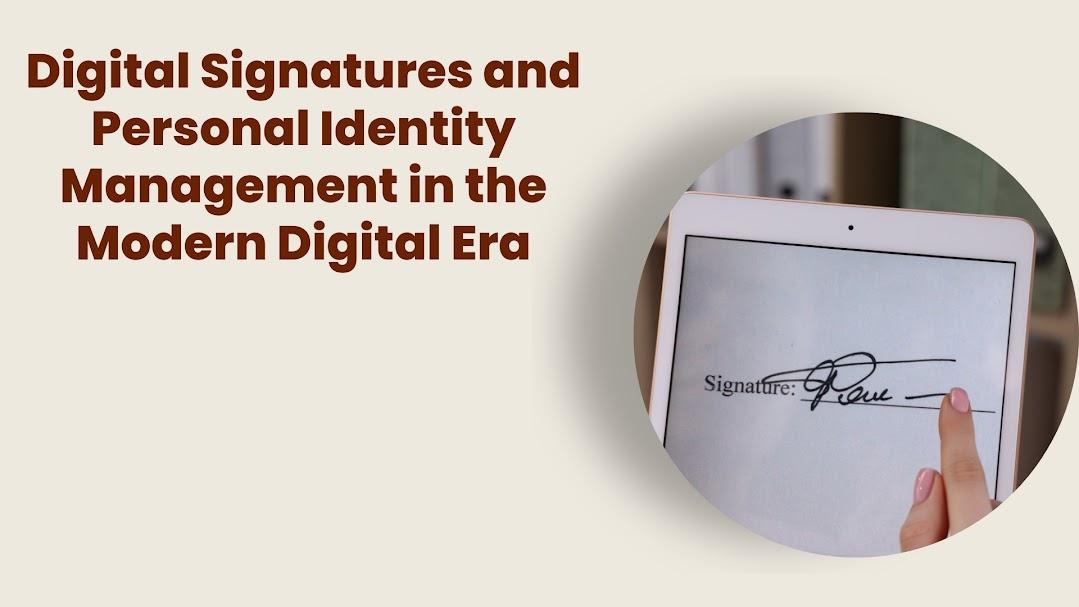
In today’s fast-evolving digital environment, secure and reliable identity verification has become a necessity rather than a choice. As businesses, governments, and individuals increasingly adopt paperless systems and online transactions, technologies like digital signatures and personal identity management (PIM) have gained immense importance. These tools not only validate digital interactions but also protect sensitive personal and organizational data from misuse.
Digital signature establish trust in electronic communication by ensuring that documents and messages are authentic and unchanged. Meanwhile, personal identity management focuses on how individuals control and secure their digital identities. Together, these two elements form the backbone of secure digital ecosystems.
A digital signature is a secure cryptographic method used to verify the authenticity and integrity of digital data. Unlike traditional handwritten signatures, digital signatures rely on mathematical algorithms to confirm that a document has not been altered and that it originates from a verified source.
They are built on the principle of Public-key cryptography, which uses two keys—a private key for signing and a public key for verification.
The working of a digital signature can be simplified into the following steps:
A document or message is created by the sender.
A hash value (a unique digital fingerprint) is generated using algorithms like SHA-256.
This hash is encrypted using the sender’s private key, forming the signature.
The signed document is sent to the recipient.
The recipient decrypts the signature using the sender’s public key.
A new hash is generated from the received document.
If both hashes match, the document is verified as authentic and unchanged.
A complete digital signature system typically includes:
Hash Algorithms: Ensure data integrity
Encryption Methods: Such as RSA or Elliptic Curve Cryptography
Digital Certificates: Usually in X.509 format
Certificate Authorities (CAs): Trusted entities that issue and verify digital certificates
Digital signatures are legally recognized across many countries when they meet regulatory standards:
India: Governed by the IT Act, 2000
European Union: Regulated under eIDAS
United States: Covered by ESIGN Act and UETA
In India, digital signatures are issued by licensed authorities under the Controller of Certifying Authorities (CCA), ensuring their legal validity.
Governments use digital signatures for secure and efficient e-governance processes, including tax filing, identity verification, and tender approvals.
Businesses rely on digital signatures for contracts, employee onboarding, approvals, and financial documentation.
Legal professionals use them for filing documents, validating agreements, and maintaining secure records.
Digital signatures are used for patient records, prescriptions, and claims processing, ensuring confidentiality and compliance.
Banks use digital signatures for secure transactions, loan documentation, and compliance reporting.
High Security: Protects data from tampering and unauthorized access
Speed and Efficiency: Enables instant verification and faster workflows
Cost Savings: Eliminates paper, printing, and storage costs
Eco-Friendly: Supports sustainable, paperless operations
Global Acceptance: Widely recognized in international transactions
Despite their benefits, digital signatures face certain challenges:
Limited awareness
Integration challenges with older systems
Secure storage of private keys
Differences in international regulations
Compliance with global standards like GDPR and ISO certifications
Phishing attacks
Malware threats
Key theft
To address these risks, organizations adopt multi-factor authentication (MFA), biometric verification, and secure hardware tokens.
Personal Identity Management refers to the processes and technologies used to manage and secure an individual’s digital identity. It ensures that only authorized users can access specific systems and data.
Identity Providers (IdPs): Platforms that verify user identity (e.g., Google login systems)
Access Control Systems: Define permissions and roles
Single Sign-On (SSO): Allows access to multiple systems with one login
Multi-Factor Authentication (MFA): Adds extra layers of security
Managing a digital identity involves several stages:
Creation: Registering a new user
Provisioning: Granting access rights
Monitoring: Tracking usage and behavior
Deactivation: Removing access when no longer needed
Decentralized identity systems use blockchain to create secure, tamper-proof identity records that users control.
Technologies like facial recognition, fingerprint scanning, and iris detection enhance identity verification.
AI helps detect suspicious behavior and prevent identity fraud by analyzing patterns in user activity.
While these technologies improve efficiency and security, they also raise important concerns:
Data Minimization: Only essential data should be collected
User Consent: Individuals must know how their data is used
Right to Erasure: Users should be able to delete their data
Balancing security with privacy is crucial for building trust in digital systems.
The future of digital identity management and signatures is evolving rapidly, with several promising developments:
Digital Identity Wallets: Secure storage for credentials and certificates
Cross-Border Verification: Seamless identity validation across countries
Zero Trust Security Models: Continuous verification of users
Quantum-Safe Cryptography: Preparing for future computing threats
These advancements will further strengthen digital trust and security.
Getting a digital signature is a simple process:
Visit a trusted service provider’s website.
Fill in personal or organizational details.
Select certificate type and validity period.
Choose whether you need a USB token.
Complete the payment process.
Verify your identity through OTP or documentation.
Receive your digital signature certificate securely.
Suggested read:- Digital Signature Certificate for Income Tax
Digital signatures and personal identity management are no longer optional—they are essential tools for secure digital interactions. Digital signatures ensure that online communications remain authentic and tamper-proof, while identity management systems protect access and maintain privacy.
Together, they create a secure digital framework that supports businesses, governments, and individuals in an increasingly connected world. As cyber threats continue to evolve, the integration of strong identity management and digital signature solutions will be crucial for maintaining trust, security, and compliance.
By adopting these technologies responsibly, organizations and individuals can confidently embrace digital transformation while safeguarding their data and identities.