English
 Arabic
 French
 Spanish
 Portuguese
 Deutsch
 Turkish
 Dutch
Dutch
 Italiano
 Russian
 Romaian
 Portuguese (Brazil)
 Greek
Greek
Expert Garage Floor Coating Kingsport AZ for Durable Floors
Home |
2026-02-09 18:12:30
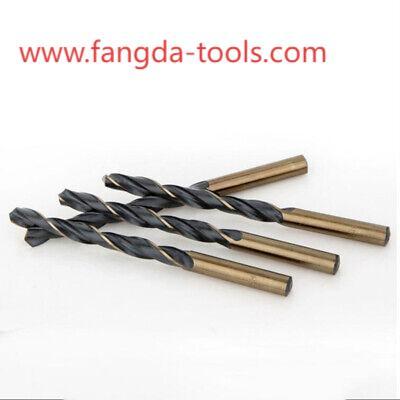
In modern machining and maintenance environments, selecting the right cutting tool directly affects workflow stability. The Fangda HSS Twist Drill Bit from fangda-tools is often discussed when users need a dependable option for routine drilling tasks in workshops, repair sites, and production settings. A well-made bit is not only about creating holes, but also about maintaining control, reducing interruptions, and keeping operations consistent across different materials.
A twist drill is widely used because of its balanced structure. The spiral groove design helps remove chips while keeping the cutting edge engaged with the surface. This allows the operator to maintain steady pressure without forcing the tool. When the groove angle and edge geometry are produced with care, the drilling process becomes smoother and easier to manage, especially during repeated use.
Material choice also plays a significant role in tool behavior. High-speed steel is commonly selected for its ability to handle heat generated during rotation. When drilling metal, friction builds quickly, and a material that tolerates temperature changes helps prevent edge damage. Because of this characteristic, such tools are frequently used in mechanical repair, equipment assembly, and general fabrication work.
Another important factor is dimensional stability. A properly manufactured bit keeps its shape during operation, which helps produce holes with clean edges. This is valuable when parts must fit together accurately, such as in maintenance of machinery, installation of components, or preparation of threaded holes. Consistent diameter and straight cutting edges make the process easier to control without repeated adjustments.
Surface treatment can also influence performance. A smooth finish reduces resistance while the bit rotates, allowing chips to move away without clogging the groove. When chips are cleared efficiently, the cutting edge stays in contact with the material instead of rubbing against it. This helps the operator maintain a steady rhythm and reduces unnecessary wear during long working sessions.
Versatility is another reason this type of drill is widely used. It can be applied to different metals as well as certain plastics and wood, making it suitable for mixed working environments. Instead of switching tools frequently, users can rely on one design for many routine tasks. This simplifies tool management and helps keep work areas organized.
For workshops that focus on regular maintenance or small-scale production, reliability is often more important than complex features. A tool that performs in a predictable way allows the operator to concentrate on accuracy rather than worrying about sudden changes in cutting behavior. Over time, this consistency supports safer handling and more efficient work.
Tool selection is not only about specifications; it is also about trust in manufacturing quality and long-term usability. When a drill bit is produced with attention to structure, material, and finish, the difference can be noticed during everyday use rather than only in technical descriptions.
If you would like to see more details about tool designs, materials, and available options, you can visit https://www.fangda-tools.com/news/industry-news/everything-you-need-to-know-about-hss-twist-drill-bit.html and browse the product pages where different drilling solutions are presented in a clear and practical way