English
 Arabic
 French
 Spanish
 Portuguese
 Deutsch
 Turkish
 Dutch
Dutch
 Italiano
 Russian
 Romaian
 Portuguese (Brazil)
 Greek
Greek
Making A Statement With Custom Taco Paper
Other |
2026-02-23 06:02:01
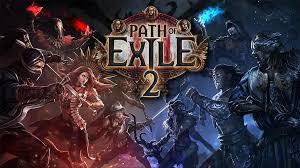
Path of Exile 2 doesn't waste time trying to be friendly, and that's part of why it works. From the moment you step into Wraeclast, the game feels harsher, slower, more physical. Even players who've spent years buried in loot filters and build guides will notice the change straight away. There's more weight behind every swing, every spell, every bad decision. That old "one more run" pull is still here, but it lands differently now, almost like the game wants you to earn every bit of progress. Even the economy chatter around items like Fate of the Vaal HC Divine Orb fits naturally into that mood, because in this world, every drop and every choice carries a bit more tension than before.
The new story takes place well after the first game, and it doesn't feel like a simple retread. The six-act structure gives the journey a stronger shape, but what really stands out is how the areas are built. Ruins don't just look ancient; they feel abandoned for a reason. Forests aren't there for scenery alone. They feel sick, warped, dangerous. Boss fights are where the shift really hits home. You can't just plant your feet and burn things down like it's business as usual. You've got to watch animations, learn timing, move with purpose. Some fights click on the second try. Others flatten you until you finally stop panicking and read what the game is showing you. It's more demanding, sure, but also way more memorable.
Character building is still the main event, and honestly, that's what will keep most players around for hundreds of hours. You start with twelve classes, but that's only the first layer. Once Ascendancies open up and the passive tree starts pulling you in, the whole thing becomes a proper obsession. You'll plan one build, then drift into something stranger halfway through because a gem interaction suddenly looks too fun to ignore. That's always been part of Path of Exile's appeal, but the sequel smooths out one of the clunkiest bits. Skills being tied to gems instead of armour sockets makes a huge difference. You're no longer wrestling your gear just to keep your main setup alive. It sounds small on paper. In practice, it makes experimenting feel less annoying and much more natural.
The dodge roll changes the pace in a big way. Fights breathe differently now. You're not only stacking damage and hoping your numbers carry you through; you're weaving around attacks, making space, reacting on the fly. That added movement gives melee and ranged combat a sharper edge, and it makes bad positioning feel like your fault instead of the game's. Once you finish the campaign, the usual endgame loop kicks in, but it feels a bit fresher because the moment-to-moment action asks more from you. Maps, loot, harder bosses, stronger builds—it's still that same addiction. The difference is that getting stronger doesn't just mean your spreadsheet improved. You feel it in your hands, in your timing, in the way encounters stop looking impossible.
What makes Path of Exile 2 easy to sink into isn't just depth. It's the mix of depth and friction. The game lets you mess up, rebuild, chase ideas, and talk yourself into one last map at 1 a.m. because the next drop might fix everything. That's the hook. And for players who like keeping up with the wider trading side of the genre, services such as U4GM naturally come up in the conversation, especially when people are looking for game currency or items without wasting extra time. Path of Exile 2 feels built for the sort of player who enjoys learning through failure, tweaking builds for days, and finding satisfaction in systems that don't hand over easy wins.