English
 Arabic
 French
 Spanish
 Portuguese
 Deutsch
 Turkish
 Dutch
Dutch
 Italiano
 Russian
 Romaian
 Portuguese (Brazil)
 Greek
Greek
Building Your Dream Wasteland: The Art of C.A.M.P. in Fallout 76
Games |
2026-02-25 02:36:37
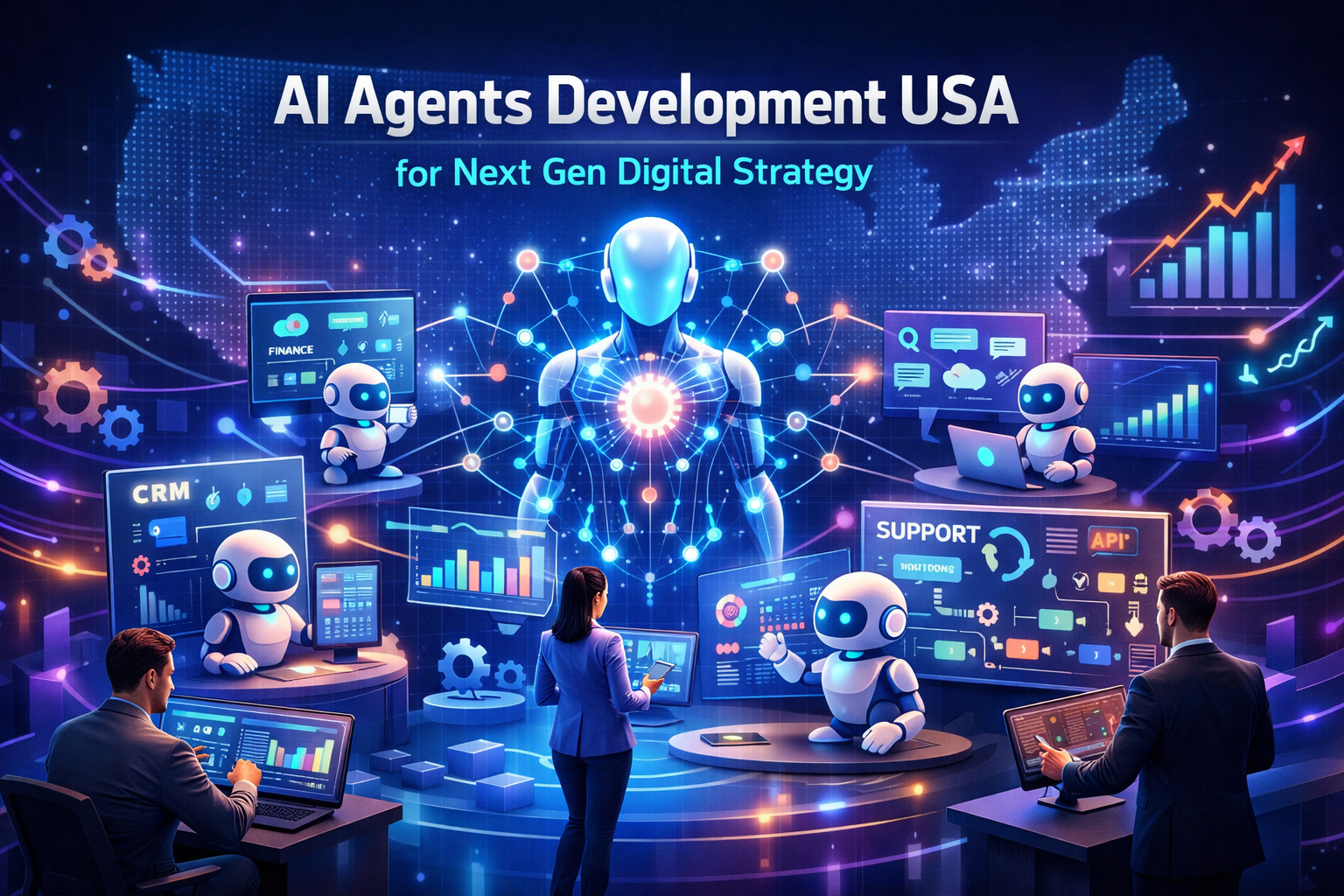
In today’s rapidly advancing digital landscape, businesses are turning to AI agents development USA to build intelligent systems that can automate workflows, make decisions, and execute tasks with minimal human intervention. Unlike traditional automation tools, AI agents are designed to think, learn, and act independently, making them a powerful asset for modern enterprises. Organizations that adopt AI agents early are transforming their operations, improving efficiency, and creating smarter digital strategies for long-term success.
What Are AI Agents and Why They Matter
AI agents are autonomous software systems that can perceive data, analyze it, and take actions to achieve specific goals without constant human input.
These systems go beyond basic automation. They can handle multi-step workflows, interact with APIs, and adapt based on real-time data.
In simple terms, AI agents act like digital employees. They can manage tasks, make decisions, and continuously improve their performance over time.
This capability is what makes them a key component of next-generation digital strategies.
The Rise of AI Agents in Enterprise Strategy
AI agents are becoming a central part of enterprise technology. Gartner predicts that around 40% of enterprise applications will include AI agents by the end of 2026, showing how quickly adoption is growing.
Recent industry developments also highlight this shift. Companies like Oracle and Snowflake are integrating AI agents into enterprise software to automate tasks, improve efficiency, and enhance decision-making.
This trend shows that AI agents are not just an innovation. They are becoming the new interface for how businesses operate.
How AI Agents Transform Digital Strategy
AI agents are redefining digital strategy by enabling businesses to move from reactive operations to proactive, intelligent systems.
Automation Beyond Basic Tasks
Traditional automation follows fixed rules. AI agents go further by handling complex workflows and adapting to changing conditions.
They can:
This allows businesses to operate faster and more efficiently.
Intelligent Decision-Making
AI agents analyze large volumes of data in real time, enabling smarter decision-making.
Businesses can:
This shifts organizations from intuition-based decisions to data-driven strategies.
Continuous Learning and Adaptation
Unlike traditional systems, AI agents learn from experience. They improve over time, becoming more accurate and efficient.
This continuous improvement ensures long-term value and scalability.
Key Benefits of AI Agents Development
1. Significant Time Savings
AI agents automate repetitive tasks, freeing up valuable time for employees.
Organizations report reclaiming over 40 hours per month on routine tasks through AI agent automation.
This allows teams to focus on strategic work instead of manual processes.
2. Faster Process Execution
Tasks that once took days can now be completed in minutes with AI agents.
This speed improves operational efficiency and accelerates business outcomes.
3. Cost Reduction
Automation reduces the need for manual labor and minimizes errors, leading to lower operational costs.
AI agents also optimize resource allocation, improving overall efficiency.
4. 24/7 Operations
AI agents work continuously without breaks, ensuring consistent performance and availability.
This is especially valuable for customer service, monitoring, and operational tasks.
5. Improved Accuracy
AI agents reduce human error by performing tasks with precision and consistency.
This improves data quality and decision-making.
6. Enhanced Productivity
By automating routine tasks, AI agents allow employees to focus on higher-value activities.
This leads to increased productivity and better outcomes.
Real-World Use Cases of AI Agents
AI agents are already transforming industries through practical applications.
Customer Support Automation
AI agents handle customer queries, resolve issues, and provide instant responses, improving user experience.
Finance and Operations
They automate invoice processing, expense management, and financial forecasting.
Sales and Marketing
AI agents generate leads, personalize outreach, and manage customer interactions.
Supply Chain Management
They optimize inventory, predict demand, and improve logistics.
Human Resources
AI agents assist with recruitment, onboarding, and employee management.
These use cases demonstrate how AI agents are driving efficiency and innovation across industries.
Why Choose AI Agents Development in the USA
Access to Advanced AI Ecosystems
The USA is a global leader in AI innovation, offering access to cutting-edge tools, frameworks, and infrastructure.
Highly Skilled AI Talent
US-based companies have access to experienced AI engineers, data scientists, and developers who specialize in building advanced systems.
Focus on Enterprise-Grade Solutions
AI development companies in the USA prioritize scalable, secure, and customized solutions tailored to business needs.
Strong Governance and Compliance
AI agents require proper governance to ensure safe and reliable operation. US companies follow strict standards for data security and compliance.
Key Components of AI Agent Development
Data Integration
AI agents rely on high-quality data from multiple sources. Integrating data effectively is essential for accurate performance.
Decision-Making Models
Machine learning and AI models enable agents to analyze data and make decisions.
Tool Integration
AI agents interact with APIs, databases, and external systems to perform tasks.
Governance and Control
Proper governance ensures that AI agents operate within defined boundaries and follow business rules.
These components work together to create intelligent and reliable systems.
Challenges in AI Agents Development
While AI agents offer many benefits, businesses must address certain challenges.
Data Quality Issues
AI agents depend on accurate and structured data. Poor data can lead to incorrect decisions.
Integration Complexity
Integrating AI agents with existing systems can be complex and time-consuming.
Governance and Risk Management
AI agents must be monitored to ensure they operate safely and do not exceed their authority.
Recent incidents, such as AI-related data exposure, highlight the importance of proper governance and oversight.
High Initial Investment
Developing advanced AI agents requires investment in technology and expertise.
These challenges can be managed with the right development strategy and partner.
Best Practices for Successful AI Agent Implementation
Start with Clear Objectives
Define what you want to achieve with AI agents and align them with business goals.
Build a Strong Data Foundation
Ensure your data is accurate, structured, and accessible.
Focus on Integration
AI agents should work seamlessly with existing systems and workflows.
Implement Governance Frameworks
Establish rules, monitoring, and control mechanisms to ensure safe operation.
Start Small and Scale
Begin with pilot projects and expand successful implementations.
Following these practices increases the chances of successful AI adoption.
Future Trends in AI Agents Development
Multi-Agent Systems
Businesses are moving toward systems where multiple AI agents collaborate to complete complex tasks.
AI as a User Interface
AI agents are becoming the primary interface for interacting with enterprise systems, replacing traditional dashboards.
Increased Automation
AI agents will handle more complex workflows, reducing the need for manual intervention.
Focus on Security and Governance
As AI agents become more powerful, businesses will prioritize security, monitoring, and compliance.
Integration with Generative AI
Combining AI agents with generative AI will enable smarter and more dynamic systems.
These trends will shape the future of digital strategy and enterprise technology.
Why AI Agents Development Is a Strategic Investment
AI agents are not just a technological upgrade. They represent a shift in how businesses operate.
They help organizations:
McKinsey estimates that AI agents could generate up to $4.4 trillion in value annually, highlighting their massive potential.
Businesses that invest in AI agents today are building the foundation for future growth and innovation.
Conclusion
AI agents development USA is shaping the next generation of digital strategy by enabling businesses to automate processes, make intelligent decisions, and operate more efficiently. These systems go beyond traditional automation, offering adaptability, scalability, and continuous learning.
From improving productivity and reducing costs to enhancing customer experiences, AI agents deliver measurable results across industries. However, success depends on choosing the right development partner and implementing a well-structured strategy.
If you’re ready to transform your business with intelligent automation, working with experts is essential. We are Zylo specializes in building advanced AI agents that help businesses streamline operations, enhance decision-making, and achieve long-term success in today’s competitive digital landscape.