English
 Arabic
 French
 Spanish
 Portuguese
 Deutsch
 Turkish
 Dutch
Dutch
 Italiano
 Russian
 Romaian
 Portuguese (Brazil)
 Greek
Greek
RSorder – Top Choices for Buying OSRS Gold Securely in 2025
Games |
2025-11-04 09:13:53
For most players, completing Diablo II Resurrected means defeating Baal on Hell difficulty and perhaps conquering the Uber bosses. But for a dedicated subset of the community, the game offers a challenge that stretches across months or even years. It is known informally as the Holy Grail. The goal is deceptively simple: collect every set item, every unique item, and every rune in the game. No checklist is provided. No tracker marks progress. Only the player’s own memory, spreadsheets, and sheer determination stand between them and the rarest treasures Sanctuary has to offer. At the heart of this pursuit lies a keyword that defines the entire endeavor: patience.
The Holy Grail challenge existed within the Diablo II community long before Diablo II Resurrected brought the game to modern platforms. But the remaster revitalized the pursuit, giving veterans a reason to start fresh and newcomers a goal to strive toward. The challenge is monumental. There are hundreds of unique items, dozens of set pieces, and 33 runes to collect. Many of these are common drops, found dozens of times over the course of a normal playthrough. But a handful—items like Tyrael’s Might, Mang Song’s Lesson, or the legendary Zod rune—are so impossibly rare that players may farm for years without ever seeing one.
What makes the Holy Grail so compelling is the structure it imposes on the endgame. Without a specific goal, players might drift aimlessly, farming whichever zone suits their current build. But the Holy Grail gives purpose to every run. A player might spend a week farming the Ancient Tunnels for a specific armor base, then shift to the Cow Level in search of high runes, then focus on Terror Zones for the chance at a unique ring that has eluded them for months. Each area, each difficulty level, each monster type offers different drop odds, and optimizing the hunt requires deep knowledge of the game’s loot tables and area levels.
The challenge also fosters a unique relationship with the game’s randomness. In Diablo II Resurrected, the most coveted items are not guaranteed through quest chains or boss kills. They appear through pure, unadulterated chance. A player might find a Griffon’s Eye diadem on a random zombie in the Blood Moor or spend hundreds of hours farming Mephisto without ever seeing one. This unpredictability creates moments of genuine euphoria. The sight of a unique sacred armor—the base for Tyrael’s Might—dropping from a monster sends the heart racing, followed by the agonizing pause before identifying it, knowing that it could be the worthless Templar’s Might instead of the grail’s ultimate prize.
The community plays an essential role in sustaining the Holy Grail pursuit. Players share their progress through spreadsheets, screenshots, and dedicated forums. They celebrate milestones—the hundredth unique, the final set piece, the elusive high rune—with genuine enthusiasm. The challenge is inherently solitary, but the community transforms it into a shared experience. New grailers learn from veterans which zones offer the best odds for specific items, how to optimize magic find without sacrificing kill speed, and how to maintain sanity through the inevitable dry spells.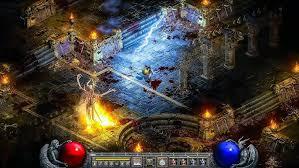
diablo2 resurrected is a game about accumulation. Players accumulate levels, gear, runes, and wealth. The Holy Grail represents the ultimate expression of this accumulation, a goal that asks not just for skill or knowledge but for dedication that borders on obsession. It is a testament to the depth of the game that such a challenge exists and to the passion of the community that so many willingly undertake it. For those who pursue it, the Holy Grail is not merely a collection; it is a journey through every corner of Sanctuary, a tribute to a game that offers infinite depth to those patient enough to seek it.